The 100-Year-Old Kitchen That Makes Smart Homes Look Stupid

Tomorrow is International Women’s Day, and I keep thinking about a room that is older than everyone reading this.
In 1926, Margarete Schütte-Lihotzky designed the Frankfurt Kitchen for Ernst May’s New Frankfurt housing program. In 2026, that kitchen turns 100. Most of today’s “smart” home products will not make it to their tenth birthday. Many won’t make it to five.
This is not nostalgia. This is a design performance review.
The Frankfurt Kitchen wasn’t a mood board. It was a system.
Schütte-Lihotzky studied movement, timing, reach, and repetition. She treated domestic labor with the same seriousness factories gave to production lines, but directed that rigor toward daily life in small apartments. MoMA describes it plainly: laboratory logic, time-motion studies, interviews with women doing the work, and a compact arrangement of built-ins that reduced unnecessary steps.
That is innovation: not a brighter dashboard, not an AI-generated shopping list, but a room that physically removes friction from ordinary life.
New Frankfurt built at city scale during a housing crisis. About 10,000 kitchens were installed, and they were designed for constrained floor plans, with many variants under roughly seven square meters. The point was never luxury. The point was democratic competence, the same kind of clarity under constraint that defined other enduring design systems of the twentieth century.
You can feel the intelligence in the details.
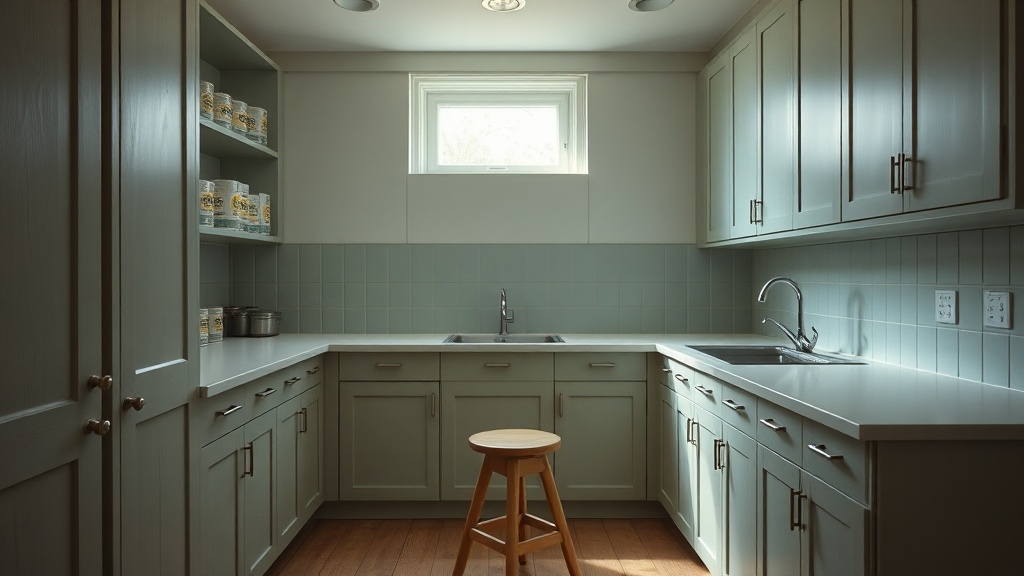
Storage bins were labeled for staples. Surfaces were chosen for use, not optics. The room width was calculated so a person could pivot between tasks instead of walking laps. A stool acknowledged that standing labor is labor. Nothing in the composition asked for applause. Everything asked: does this save time, reduce strain, and make the next task easier?
That question has mostly vanished from smart-home marketing.
In the last few years we’ve watched connected-home ecosystems quietly expire. Google ended Dropcam support on April 8, 2024. Belkin ended cloud services and app support for many Wemo products on January 31, 2026, with users pushed toward narrow compatibility paths, refund forms, or recycling bins. A “smart” object that depends on remote servers is often a rental disguised as ownership.
So yes, your light switch can now answer voice commands. It can also become a dead switch the moment a product team updates a roadmap, which is the same category error behind so much design criticism of connected products.
A 1926 kitchen has no firmware update policy.
This is why the Frankfurt Kitchen matters now, maybe more than it did in design school slideshows. It represents durable intelligence embedded in space. Its core value survives ownership changes, software cycles, protocol wars, and branding pivots because the innovation lives in proportions, adjacencies, and material decisions.
Space is the original interface.
If you want to understand why this centenary deserves attention, compare failure modes.
When a cloud service dies, features disappear overnight.
When a well-designed room ages, it often becomes more legible.
The Frankfurt Kitchen wasn’t perfect, and it has been criticized, including by Schütte-Lihotzky herself, for how domestic roles were framed in its era. But even that tension is instructive. Good design history is not saint-making; it is evidence. The evidence here is that one woman architect, working inside severe economic and spatial limits, produced a framework that still shapes how millions of kitchens are organized. If that pattern sounds familiar, it belongs beside other stories of overlooked women in design history.
That is what permanent design looks like: it changes default behavior for generations.
Ahead of International Women’s Day, we should be precise about what we celebrate. Not representation as branding. Not panel-discussion feminism attached to disposable hardware. Celebrate the people who changed the physical grammar of daily life.
Schütte-Lihotzky did exactly that.
The next time a company calls a kitchen “intelligent” because it has a subscription layer, ask an unfashionable question: will this still improve someone’s life in 2126?
The Frankfurt Kitchen already answered, with the same durable confidence you still see in systems that make navigation effortless.
Notes and references
- MoMA, Counter Space: The Frankfurt Kitchen (history, methods, and social-housing context): https://www.moma.org/interactives/exhibitions/2010/counter_space/the_frankfurt_kitchen/
- MoMA Collection record, Frankfurt Kitchen from the Ginnheim-Höhenblick Housing Estate (1926–27): https://www.moma.org/collection/works/126451
- Museum Angewandte Kunst (Frankfurt Kitchen, variants, scale, and New Frankfurt context): https://www.museumangewandtekunst.de/en/visit/exhibitions/2017/the-frankfurt-kitchen/
- Austrian Cultural Forum NY (Schütte-Lihotzky’s social and political architectural philosophy): https://acfny.org/exhibition/margarete-schutte-lihotzky-pioneering-architect-visionary-activist/
- Belkin Official Support, Wemo Support Ending – What You Need to Know (Jan 31, 2026): https://www.belkin.com/support-article/?articleNum=335419
- Google Nest Help, Support for Dropcam and Dropcam Pro ended (Apr 8, 2024): https://support.google.com/googlenest/answer/9240255?hl=en