The Algorithm Knows Your Pores: Beauty Tech and the Dribbble-ification of Skin

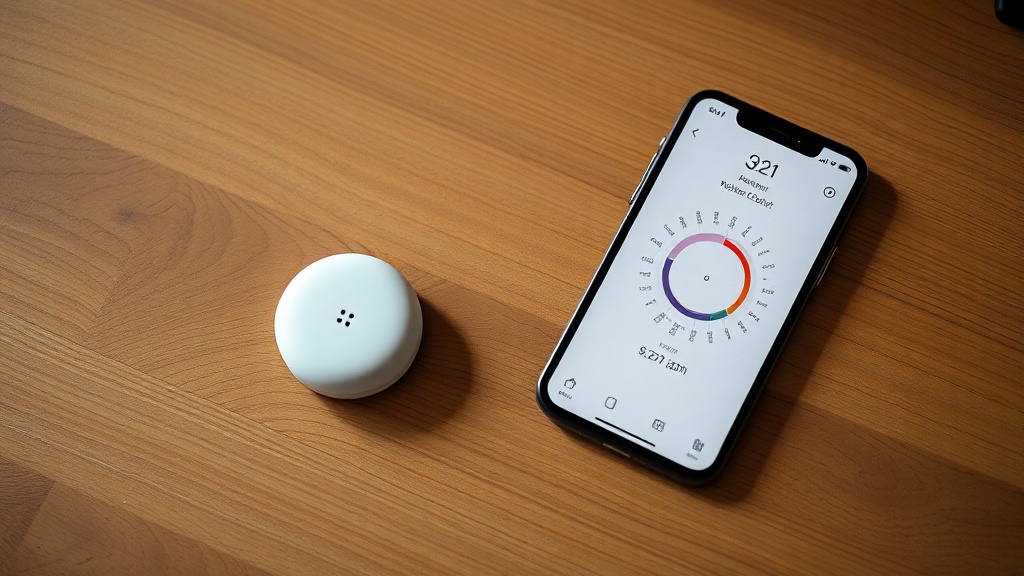
There's a device on my desk right now. A friend left it after staying last week and hasn't collected it yet. It's a small white disc, smooth as a river stone, with a single indicator LED. It scans your skin — moisture levels, sebum, UV damage — and pairs with an app that tells you exactly which products to buy.
The hardware is genuinely beautiful. That's the first thing I'll say. Whoever designed the physical object thought carefully about material, weight, and the quality of the matte finish. It sits in your palm like something considered.
The app is a different matter entirely.
The Dashboard Problem
Open the app and you're met with a radial chart, four percentage scores, a skin "profile" rendered in a soft gradient, and a product recommendation carousel that refreshes every time you scan. It is — visually — a masterclass in the aesthetics of medical credibility. White space. Pastel accents. Data visualizations that look like they belong in a wellness clinic waiting room.
And it tells you nothing.
I don't mean that uncharitably. I mean it structurally. A score — Hydration: 64% — exists in a frame of reference you cannot interrogate. Sixty-four percent of what? Compared to whom? Measured by what standard, set by whose research, updated on what schedule?
This is the Dribbble-ification of skincare. Dribbble — for those outside the design bubble — is a platform where designers post polished visual work stripped of any context, client constraint, or problem being solved. It's craft without causality. Beautiful surfaces floating free of purpose.
Beauty tech does the same thing with biology. It wraps incomplete data in an interface so well-designed you stop asking whether the data is actually useful. The visualization feels like knowledge. That feeling is the product.
I've spent fifteen years watching this happen in graphic design. Now it's happening to skin.
What AI Personalization Actually Means
The phrase "AI-powered skincare" appears in roughly every press release published in this category since 2023. Beauty tech had a visible and growing presence at CES this January — skin-scanning booths, AI consultation kiosks, personalized formulation demos. The promise is consistent: your routine, personalized to you, optimized continuously, learning as you go.
Let me translate that from marketing into mechanics.
What most of these systems actually do is compare your inputted data — age, skin type, environmental factors, scan readings — against a training corpus of skincare outcomes and product formulations. They find a statistically likely recommendation set. They surface it through an interface designed to feel personalized even when the recommendation is one of a handful of possible outputs clustered around common profiles.
This is not nothing. Statistical pattern matching has genuine value, especially for people who have no existing framework for thinking about their skin and want a starting point.
But it is also not what "AI-powered personalization" implies to most users. It implies the tool knows you, specifically. That your data is being analyzed in a way that would change materially if you, specifically, hadn't been the one scanning. For many of the products I've encountered — and from what I can parse of the underlying approaches companies describe publicly — this is not true. You are a data point in a cluster. The cluster gets a recommendation. You receive the recommendation as if it were yours.
This is a design problem. Not a skincare problem.
The interface has been designed to communicate intimacy it cannot deliver. The data visualization, the soft personalized language ("Your skin is telling us..."), the incremental learning narrative — these are design decisions that assert a relationship between the tool and the user that the underlying model cannot support.
Dieter Rams Would Not Have Your Skin Scanned
I keep coming back to Rams when I encounter these products, because his principles have a clarifying brutality when applied to categories that mistake complexity for quality.
Good design is honest. It does not make a product appear more innovative, powerful, or valuable than it really is.
The beauty tech category is, systematically, making products appear more innovative, powerful, and valuable than they really are. Not through fraud — the scans do something — but through interface design choices that manufacture the impression of depth where shallowness exists.
Good design is as little design as possible. It concentrates on the essentials and does not burden the product with non-essentials.
The app ecosystems I've spent time with are consistently loaded with non-essentials. Progress trackers. Streaks. Community features. Content integrations. Retail recommendation engines poorly disguised as diagnostic tools. Each layer adds visual mass that substitutes for substance.
I'm not arguing that good skincare routines don't matter, or that helping people find products that work for their skin is a cynical enterprise. I'm arguing that the design language of beauty tech is doing active harm — it is conditioning people to trust quantified dashboards over their own sensory knowledge of their own bodies. You have been washing your face every morning for twenty-five years. You know, in your hands and your mirror, more than a percentage score can tell you.
The device on my desk is beautiful, and it is teaching you not to trust yourself.
Where It Gets Interesting
I want to be fair, because fair criticism is more useful than polemic.
There are two categories within beauty tech where the design problem is actually being solved, or at least earnestly attempted.
The first is UV damage detection. Consistent, longitudinal tracking of sun damage accumulation — especially for people with the kind of skin that doesn't visibly freckle or tan — has genuine clinical value. The data is simple, the reference point is clear (UV index, cumulative exposure), and the recommendation is actionable: use higher SPF, limit midday exposure. The interface doesn't need to perform depth it doesn't have, because the depth it has is sufficient.
The second is personalized formulation — actual lab-compounded products mixed to your specific skin profile, not a recommendation engine pointing you to a shelf SKU. A handful of brands now do this credibly. The AI isn't the product; the compound is. The interface is just a intake form. That's honest.
These are the categories where the technology is doing what it claims. They're also, not coincidentally, less visually spectacular. Less dashboard, more letter from a pharmacist. Less radial chart, more precise percentage of niacinamide.
Precision, in design, almost always looks quieter than the alternatives.
A Note on International Women's Day
I'm aware this piece lands close to a date when "beauty" topics become conspicuously programmed. And I want to say something direct about that.
The empowerment narrative in beauty tech — that tracking your skin and optimizing your routine is a form of self-knowledge, even self-determination — is, in my reading, a design narrative first. The wellness industry ran this same play with sleep scores and HRV dashboards: turn an intimate, subjective, embodied experience into a quantified interface, and then sell access to the dashboard. Now you can see it surfacing around rest and recovery culture too. Skin isn't a product. Neither is rest.
Empowering women in their skincare routines looks like teaching them to trust their own perceptions — what irritates, what soothes, what the mirror says over time. Not training them to defer to a disc and an app. The most useful tool you can give someone is confidence in their own observational competence. That's harder to package and impossible to subscribe to.
The device on my desk is rated well — I checked, out of curiosity. Reviewers praise the UI and the hardware consistently. I've been using it for a week because it's there and I'm curious.
My skin isn't any different, but my hydration score went up. The app sent me a small celebratory animation.
I'm not sure what I've learned. I'm fairly sure it isn't about my skin.