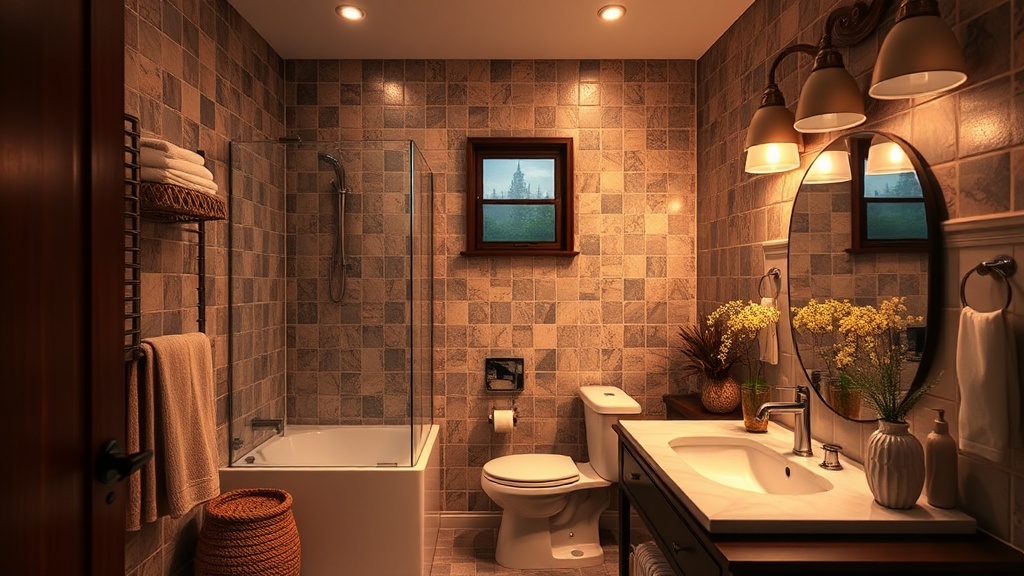
Small Bathroom Transformations Through Better Lighting

Most people underestimate the power of light, yet studies in human perception show that lighting is the single most influential factor in how we perceive spatial dimensions. In a small bathroom, poor lighting doesn't just make the room feel dark; it makes it feel claustrophobic. This guide examines how to manipulate light to expand your visual field, improve functionality, and move away from the clinical, harsh glow of standard builder-grade fixtures. We'll look at Kelvin scales, layering techniques, and the specific placement of light sources to turn a cramped utility space into a curated sanctuary.
What is the Best Light Temperature for a Bathroom?
The best light temperature for a bathroom is a balanced Kelvin scale between 2700K and 3000K for a warm, relaxing atmosphere, or 3500K to 4000K for high-clarity tasks like applying makeup. Most people make the mistake of buying "Daylight" bulbs (5000K+) because they think it looks cleaner, but that often results in a blue, sterile tint that feels more like an operating room than a home. If you want a space that feels expensive, aim for a warmer white.
Think about the way light hits different surfaces. A matte marble countertop absorbs light differently than a polished brass faucet. If your light is too "cool," your skin will look sickly in the mirror. If it's too "warm," your white towels might look yellowed and dingy. It's a delicate balance.
Here is a breakdown of how color temperature affects your mood and utility:
| Kelvin Range | Light Type | Best Use Case |
|---|---|---|
| 2700K - 3000K | Warm White | Evening wind-down, candle-lit vibes, relaxing baths. |
| 3500K - 4000K | Neutral White | Morning routines, shaving, applying makeup, skincare. |
| 5000K+ | Daylight | Avoid in small bathrooms; it feels too harsh and clinical. |
When selecting bulbs, don't just look at the wattage. Look at the CRI (Color Rendering Index). A high CRI—ideally 90 or above—ensures that the colors of your clothes or cosmetics look the same in the bathroom as they do in natural sunlight. You can research more about color rendering standards to understand why this matters for your vanity setup.
How Do You Layer Lighting in a Small Space?
Layering involves combining three distinct types of light: ambient, task, and accent. In a small bathroom, relying on a single overhead light creates heavy shadows under your eyes and chin, making you look tired (and not in a good way). By layering, you create depth that tricks the eye into seeing a larger room.
First, start with Ambient Lighting. This is your general illumination. A recessed light or a central ceiling fixture provides the base layer. However, a single bright light in the center of a small room can actually make the corners feel darker and the room feel smaller. To combat this, consider a dimmable ceiling light.
Next, add Task Lighting. This is the light you use for specific actions. The most common place for this is at the vanity. Instead of a single light bar above the mirror—which often creates unflattering shadows—try placing sconces at eye level on either side of the mirror. This provides even, frontal light on your face. Brands like Terrence or Visual Comfort often feature sconces that act as both a light source and a piece of sculptural art.
Finally, introduce Accent Lighting. This is where the magic happens. A small LED strip hidden under a floating vanity or behind a mirror creates a "halo" effect. This makes the furniture appear to float, adding a sense of airiness to the floor area. It's a subtle way to add depth without cluttering the room with physical objects.
If you're struggling with how to make a room feel more cohesive, you might want to check out our thoughts on why a room can feel cold and uninviting. The principles of light and warmth apply here just as much as they do in a living room.
Does Lighting Affect the Perception of Size?
Yes, strategically placed light can make a small bathroom feel significantly larger by drawing the eye toward the perimeter and softening the edges of the room. Dark corners make a room feel like it's closing in on you; bright, well-lit corners push the walls back.
One of my favorite tricks is using verticality. If you have a low ceiling, use uplighting. By pointing light toward the ceiling, you draw the gaze upward, emphasizing the height of the room. This is a classic designer move that works every single time. It's much more effective than trying to paint the ceiling a lighter color—though that helps too.
Consider these three placement strategies:
- The Perimeter Trick: Use wall-mounted lights to illuminate the edges of the room. This expands the visual boundaries.
- The Mirror Reflection: Position your lights to bounce off the mirror. A well-placed light-source near a mirror effectively doubles the light in the room through reflection.
- The Shadow Play: Use textured glass or frosted shades to diffuse light. Harsh, direct beams create hard shadows that make a space feel "choppy." Soft, diffused light makes a space feel seamless.
A common mistake is choosing a fixture that is too large for the scale of the room. A massive, heavy chandelier in a tiny powder room will feel oppressive. Instead, look for something with a slim profile or a lightweight silhouette. A thin, minimalist light fixture from a brand like Artemide can provide light without taking up visual "weight."
Don't forget the importance of the "Golden Hour" effect. If you have a window, your light-layering strategy should change based on the time of day. During the day, natural light is your best friend. At night, your artificial layers take over. If you don't have a window, your artificial light must work twice as hard to mimic that natural, shifting quality.
One thing to keep in mind: shadows are just as important as light. If you have a very bright light and a very dark corner, the contrast creates a visual "break" that makes the room feel smaller. You want a gradual transition from light to shadow to create a sense of flow. It's the difference between a spotlight and a glow.
If you're looking to improve your space beyond just the lighting, you might find our guide on fixing a boring blank wall helpful for adding texture and depth to your bathroom walls through art or shelving.
The goal isn't just to see better; it's to feel better. When you invest in high-quality lighting, you're investing in the ritual of your morning and evening. It's the difference between a functional box and a curated experience. Take the time to look at the Kelvin scale, the CRI, and the placement of your sconces. Your eyes—and your mood—will thank you.