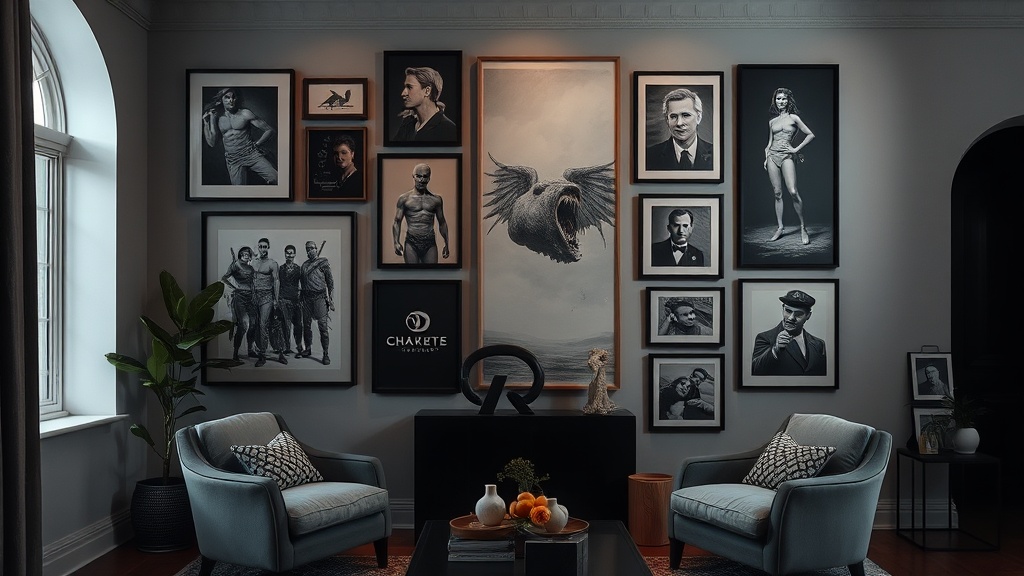
How to Create a Moody Maximalist Gallery Wall

The Art of Intentional Excess: Crafting a Moody Maximalist Gallery Wall
In my years navigating the high-pressure world of London advertising agencies, I learned one vital truth: the most impactful statements are rarely the loudest. They are the most considered. Today, as I curate my bookstore, I find myself increasingly drawn to a specific aesthetic tension—the intersection of maximalism and moodiness. We are often told that maximalism is a chaotic explosion of color, but true maximalism is not about clutter; it is about a curated abundance. It is the deliberate collection of things that tell a story.
A moody maximalist gallery wall is more than just a collection of frames. It is a visual anchor for a room. It is a way to inject soul into a space that might otherwise feel sterile or overly "minimalist-chic." When executed with precision, it creates a sense of depth, history, and intellectual curiosity. It transforms a blank wall into a sanctuary of thought.
Defining the Mood: The Palette of Shadows
Before you touch a single nail, you must define your atmosphere. A "moody" wall relies heavily on a sophisticated color palette. We are moving away from the bright, airy pastels of the early 2010s and leaning into the weight of pigment. Think deep ochre, forest green, midnight navy, and charcoal. These colors provide the "gravity" necessary to hold a large collection of disparate objects together.
The secret to a successful moody wall lies in the interplay between light and shadow. If your room is naturally dim, do not fight it. Instead, lean into it. A dark, saturated wall color—perhaps a deep umber or a bruised plum—can actually make your art "pop" by providing a high-contrast backdrop. This approach is deeply connected to how we perceive our environments; much like how you might align your space with your circadian rhythm to promote rest, a darker, moodier wall can signal to the brain that it is time to settle, reflect, and unwind.
Step 1: Curating the Collection (The Rule of Disparate Unity)
The biggest mistake amateur decorators make is buying "sets." A gallery wall should never look like a coordinated kit from a big-box retailer. It should look like it was assembled over decades. To achieve this, you need to gather items that share a common thread but differ in medium, texture, and era.
Consider these three categories of items to ensure depth:
- The Fine Art: This includes oil paintings, charcoal sketches, or even high-quality lithographs. Look for subjects with weight—still lifes, moody landscapes, or classical portraiture.
- The Found Object: This is where the "maximalist" soul truly resides. Incorporate a vintage brass mirror, a ceramic plate, or a sculptural piece of driftwood. Using thrifted brass elements can add a touch of tarnished elegance that feels much more authentic than shiny, new gold-toned decor.
- The Textural Element: A framed piece of textile, a botanical specimen under glass, or even a vintage map adds a tactile quality that flat paper cannot provide.
Pro Tip: When selecting your pieces, look for a "connective tissue." This doesn't mean they must be the same color. It could be a shared era (e.g., all 19th-century botanical prints) or a shared medium (e.g., all sketches). This creates a sense of cohesion amidst the variety.
Step 2: The Compositional Framework
Now, we address the technicality of the layout. A gallery wall can easily descend into a mess if you do not respect the geometry of the space. There are two primary ways to approach the arrangement: the Grid and the Cloud.
The Structured Grid
The grid is for the precision-minded. It involves arranging frames of the same size in a strict, symmetrical pattern. While this is often associated with minimalism, a moody grid is a powerful maximalist tool. Imagine a grid of twelve dark, moody botanical illustrations in heavy, mismatched vintage frames. The repetition provides order, while the content provides the maximalist soul. This works exceptionally well in a home office, providing a sense of structured inspiration as you refresh your remote workspace.
The Organic Cloud
The "cloud" is more traditional for maximalism. It is an asymmetrical, sprawling arrangement that grows outward from a central point. This allows for much more variety in frame size and object shape. The key to a successful cloud is to start with your largest, heaviest piece in the center (or slightly off-center) and build outward. This ensures the wall feels balanced rather than "lopsided."
Step 3: Framing and Materiality
If the art is the soul, the frame is the body. In a moody maximalist wall, the frame is not just a container; it is a part of the art itself. I am a firm believer that a poorly chosen frame can ruin even the most exquisite print.
Avoid the uniform look of thin, black modern frames. Instead, seek out texture and history. I recommend mixing the following:
- Ornate Gilt: For a touch of classical drama. The way gold leaf catches low light is essential for a moody atmosphere.
- Dark Wood: Walnut, mahogany, or even charred oak provides a grounded, organic feel.
- Natural Textures: Linen-wrapped frames or even simple, heavy-duty wooden slats can add a sense of "wabi-sabi" imperfection.
When you are sourcing these, do not overlook the charm of the secondhand market. Much like finding sustainable fashion pieces that have a history, a thrifted frame carries a certain "patina of time" that new items simply cannot replicate.
Step 4: Lighting—The Final Layer of Depth
A gallery wall without proper lighting is just a collection of objects on a wall. To truly achieve that "moody" aesthetic, you must consider how light interacts with your collection. Direct, bright overhead lighting is the enemy of atmosphere. It flattens the textures and creates harsh glares on glass.
Instead, aim for layered, directional lighting:
- Picture Lights: Small, battery-operated or hardwired brass picture lights can add a museum-quality feel and highlight specific focal points.
- Accent Sconces: A pair of wall sconces flanking the gallery wall can cast a soft, dramatic glow that enhances the shadows.
- Ambient Lamp Light: Position a floor lamp or a table lamp nearby to provide a warm, indirect light source. This creates the "pools of light" effect that is essential for a moody room.
Proper lighting is also a component of a healthy home environment. Just as you might adjust your sleep schedule to better align with natural light cycles, adjusting your artificial lighting to create a soft, warm evening atmosphere can significantly improve your well-being and the "vibe" of your living space.
The Philosophy of the Finished Wall
Once your wall is complete, resist the urge to immediately "fix" it. A truly great gallery wall is a living thing. It should feel slightly unpolished, as if it is still in the process of being discovered. If a piece feels slightly off, leave it. The tension between the pieces is where the magic happens.
"Design is not just about how a space looks, but how it feels when the lights go low and the world outside falls silent."
A moody maximalist gallery wall is an invitation to slow down. It is a visual feast that rewards the long gaze. Whether you are decorating a quiet reading nook or a grand hallway, remember that the goal is not to fill space, but to imbue it with intention, history, and a little bit of beautiful, dark magic.
Steps
- 1
Collect Your Collection
- 2
Lay Out Your Layout on the Floor
- 3
Mix Frame Styles and Textures
- 4
Anchor with a Large Statement Piece
- 5
Install Using a Template Method