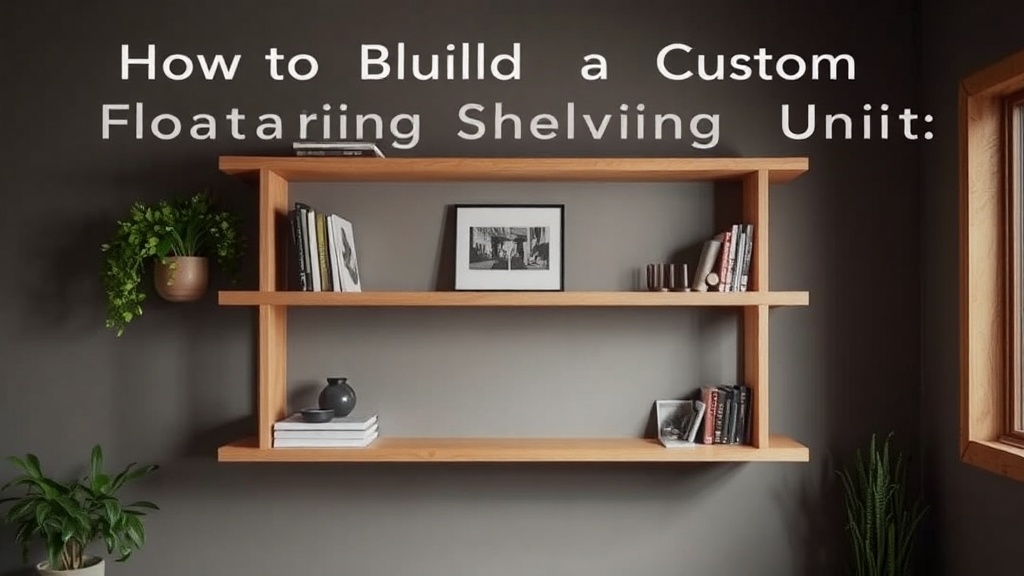
How to Build a Custom Floating Shelving Unit

A standard, mass-produced bookshelf often fails the moment it meets a non-standard wall. In a narrow alcove or a high-ceilinged kitchen, the bulky silhouette of a commercial unit creates visual clutter and breaks the architectural flow of the room. Floating shelves solve this by offering a sense of weightlessness and intentionality, turning a storage necessity into a structural design element. This guide outlines the technical process of constructing and installing custom floating shelving to ensure your installation is as structurally sound as it is aesthetically pleasing.
Selecting Your Material and Aesthetic Direction
The success of a floating shelf depends entirely on the relationship between the wood species and the surrounding architecture. A heavy, rustic reclaimed oak plank offers a sense of permanence and weight, making it ideal for a study or a library. Conversely, a slender piece of walnut or even a painted birch ply can feel much more contemporary and light in a minimalist kitchen or a bright breakfast nook. When selecting your timber, consider the grain pattern; a continuous, unbroken grain across the length of the shelf provides a much cleaner, more professional finish than a patchwork of smaller boards.
For a high-end look, avoid standard pine from big-box retailers, which tends to warp and lacks the density required for heavy loads. Instead, source hardwoods like White Oak, Black Walnut, or Teak from a local timber yard. If you are working on a tighter budget, high-grade plywood with an edge-banded veneer can mimic the look of solid wood while remaining remarkably stable. Before purchasing, verify the moisture content of the wood; seasoned timber is essential to prevent the shelves from bowing or cracking once they are mounted to your wall.
Essential Tools and Hardware
A common mistake in DIY shelving is underestimating the internal support required to hold the weight of books or ceramics. You are not just attaching a board to a wall; you are building a structural cantilever. To do this correctly, you will need a professional-grade tool kit to ensure precision and safety.
Required Tools:
- Power Drill and Impact Driver: For drilling pilot holes and driving heavy-duty screws.
- Level (Spirit Level or Laser Level): A digital laser level is highly recommended to ensure perfect horizontal alignment across long spans.
- Circular Saw or Miter Saw: For clean, square cuts through the timber.
- Clamps: To hold the internal bracket against the wall during the mounting process.
- Stud Finder: A high-quality stud finder that can detect wood, metal, and even live wires is non-negotiable.
- Sandpaper: Various grits (80, 120, and 220) for a seamless finish.
The Internal Support System:
You have two primary options for the internal structure: a hidden metal bracket system or a wooden cleat system. A metal bracket system, often consisting of steel rods that screw into the wall and slide into the hollowed-out back of the shelf, provides the sleekest, most "invisible" look. A wooden cleat system involves mounting a thick strip of wood to the wall and sliding the shelf over it. While the cleat system is easier to construct, it results in a slightly thicker profile at the base. For a truly professional, minimalist aesthetic, the metal rod method is superior.
Step-by-Step Construction Process
Follow these steps to construct a professional-grade floating shelf using the hollow-back method, which allows for a seamless, "floating" appearance without visible brackets.
1. Measuring and Layout
Determine the exact height of your shelves. Do not simply measure from the floor; consider the height of nearby furniture or architectural features like windows or light switches. Once the height is set, use your laser level to draw a perfectly straight horizontal line on the wall. This line serves as your guide for both the internal support and the final shelf position. If you are installing multiple shelves, ensure the vertical spacing is consistent to maintain visual rhythm.
2. Constructing the Internal Support (The Cleat)
If you are using the wooden cleat method, cut a piece of hardwood that is slightly shorter than the intended length of your shelf. This piece will be mounted directly to the wall studs. If you are using the metal rod method, you will instead be drilling deep holes into the back edge of your main shelf board. These holes must be perfectly straight; even a slight angle will cause the shelf to sit crookedly. Use a drill press if available to ensure the holes are perpendicular to the wood surface.
3. Preparing the Shelf Board
The "shelf" is actually two parts: the visible top/front and the internal cavity. You will need a thick piece of wood for the top and a thinner "wrap" or "skin" for the sides and front. Cut your main board to the desired length. Then, cut thinner strips of wood (approximately 1/2 inch thick) to cover the front edge and the underside. This creates a hollow box that slides over your wall-mounted support. Ensure your mitre cuts on these strips are precise—a gap in the corner will immediately signal a low-quality build.
4. Assembly and Sanding
Apply wood glue to the edges of your internal support and the edges of your "wrap" strips. Use clamps to hold the assembly together while the glue sets. Once the glue is dry, sand the entire unit. Start with a coarse 80-grit sandpaper to remove any imperfections, then move to 120-grit, and finish with a fine 220-grit for a smooth-to-the-touch surface. A well-sanded shelf is the hallmark of quality craftsmanship.
Installation and Mounting
This is the most critical phase. A shelf that looks beautiful but sags under the weight of a few coffee table books is a failure of engineering.
- Locate the Studs: Use your stud finder to mark the center of every wall stud within your shelf's span. You must anchor your support into the structural studs of the wall, not just the drywall.
- Mount the Support: Hold your internal cleat or metal bracket against the wall, aligned with your level line. Drill pilot holes into the studs first to prevent the wood from splitting. Drive heavy-duty structural screws (such as GRK or Spax screws) through the bracket and into the studs.
- Slide the Shelf On: Once the support is rock-solid, slide your hollowed-out shelf over the bracket. If you are using the metal rod method, ensure the rods are seated deeply and securely.
- Secure the Shelf: To prevent the shelf from sliding forward or off the bracket, drive small, discrete screws through the top of the shelf into the internal support, or use a construction adhesive if the shelf is intended to be permanent and non-removable.
Finishing and Styling
The final step is to protect your work. A high-quality finish does more than add color; it protects the wood from moisture and UV damage. For a natural, matte look, use a hard-wax oil like Rubio Monocoat or Osmo Polyx-Oil. These products penetrate the wood fibers rather than sitting on top like a plastic film, preserving the tactile quality of the timber. If you want a more traditional look, a clear polyurethane will provide a durable, protective layer.
Once the finish is dry, it is time to style. Avoid the temptation to clutter the surface. A well-designed shelf needs "negative space" to breathe. Group objects in odd numbers and vary the heights of your items. For example, pair a tall, sculptural vase with a stack of horizontal books and a smaller ceramic bowl. If you are using the shelves in a kitchen or a workspace, consider how they interact with your lighting. You might style a statement lighting installation nearby to cast interesting shadows across the wood grain, adding depth to the room.
For those using shelves in a utility area, such as a kitchen or a hallway, ensure the styling remains functional. If you are displaying kitchenware, you might integrate the shelves with a high-functioning coffee and tea station to create a cohesive, curated vignette that serves both a practical and aesthetic purpose.
Steps
- 1
Measure and Mark Your Wall
- 2
Install the Mounting Bracket
- 3
Prepare the Wooden Shelves
- 4
Slide Shelves onto Brackets and Secure