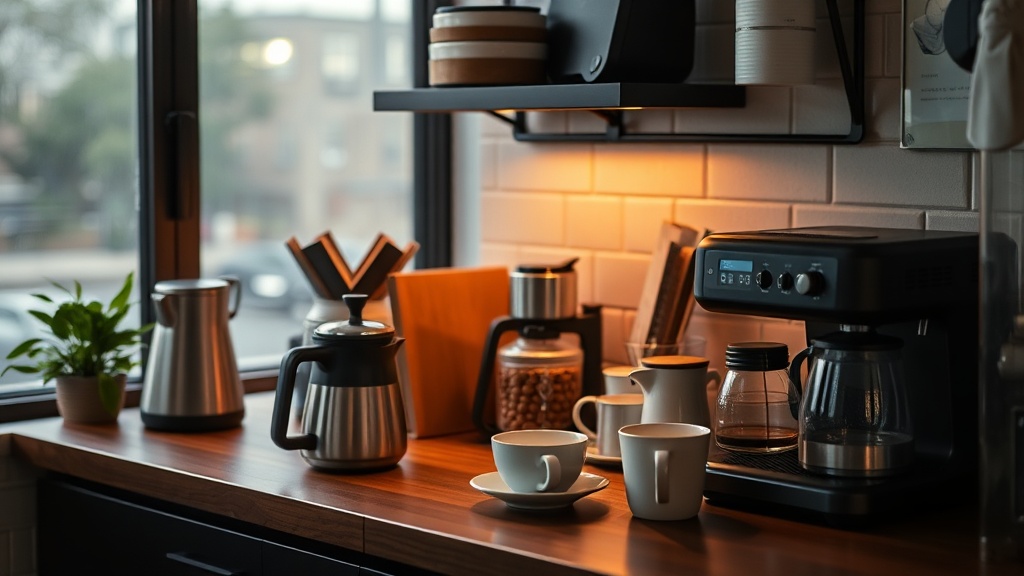
Elevate Your Morning Ritual: Designing a High-Functioning Coffee & Tea Station

The sun hits the brushed brass of a Chemex dripper at precisely 7:15 AM, casting a long, amber shadow across a slab of honed Calacatta marble. There is a specific, rhythmic geometry to a well-ordered morning: the tactile click of a ceramic lid, the controlled pour of water from a gooseneck kettle, and the visual stillness of a space designed with intention. A coffee or tea station should not be a cluttered afterthought tucked into a corner of the kitchen; it should be a dedicated micro-architecture within the home, a functional altar to the first ritual of the day.
Designing such a space requires a departure from the "appliance graveyard" mentality. Most people simply clear a patch of countertop and plug in a machine. To elevate this, one must approach the station with the precision of a curator. You are not merely arranging tools; you are choreographing a sequence of movements. Whether you are working with a sprawling kitchen island or a compact sideboard in a studio apartment, the goal is to balance aesthetic cohesion with ergonomic efficiency.
The Foundation: Selecting Your Surface and Scale
The first mistake in designing a beverage station is failing to respect the scale of the equipment. A high-end espresso machine, such as a La Marzocco Linea Micra, possesses a significant visual and physical footprint. If your surface is too small, the machine will feel cramped and utilitarian rather than sculptural. Conversely, a tiny tray for a single pour-over setup can look lost on a massive granite island.
Consider the following three archetypes for your station layout:
- The Built-In Niche: Ideal for those with dedicated cabinetry. Use a stone backsplash that extends to the ceiling to create a sense of permanence. A recessed electrical outlet is non-negotiable here to avoid the visual clutter of stray cords.
- The Sideboard Station: Perfect for dining rooms or living areas. A mid-century modern sideboard, perhaps in a dark walnut or teak, provides a sophisticated base that separates the ritual from the chaos of food preparation.
- The Minimalist Cart: For smaller dwellings, a mobile station using a tiered metal or wooden trolley allows for flexibility. This is particularly effective if you wish to move the station near a window to enjoy natural light while you brew.
When selecting your base, prioritize materials that can withstand heat and moisture. A wooden surface is beautiful but requires a high-quality, heat-resistant silicone mat or a stone coaster to prevent warping. If you are working within a tight color palette, ensure your station complements your existing color schemes for small living spaces to maintain a seamless visual flow.
The Hierarchy of Tools: Form Meets Function
A high-functioning station is organized by the frequency of use. In design, we call this the "prime real estate" rule. Items you use every single morning should be within an arm's reach, while seasonal items—like a heavy stoneware teapot for winter or a specialized matcha whisk—can be stored in a drawer or a higher shelf.
The Core Apparatus
Your primary machine is the protagonist of the space. If you are a coffee purist, your setup might center around a Fellow Stagg EKG Electric Kettle and a precision grinder. If you lean toward tea, a Fellow kettle is still excellent, but you might add a specialized temperature-controlled brewer. The key is to ensure the textures of these objects speak to one another. A matte black kettle pairs exquisitely with a brushed steel espresso machine, creating a sophisticated, industrial-modern aesthetic.
The Vessel Collection
Do not hide your cups in a high cabinet. The vessels you use are part of the station's visual identity. Instead of a mismatched collection, curate a small set of high-quality ceramics. Look for pieces with tactile interest—perhaps a hand-thrown stoneware mug from Hasami Porcelain or a delicate, thin-walled glass cup that showcases the clarity of your tea. Displaying these on a low-profile wooden stand or a small marble tray elevates them from mere kitchenware to sculptural objects.
The Organization of Consumables
The most common way a coffee station loses its elegance is through the visual noise of commercial packaging. A bright, plastic bag of coffee beans or a colorful box of tea bags breaks the aesthetic spell. To solve this, transition your consumables into uniform, airtight containers. Use glass jars with bamboo lids for loose-leaf tea, or matte-finished tins for coffee beans. This not only preserves freshness but also introduces a sense of rhythmic repetition to your display.
Lighting and Atmosphere: The Sensory Layer
A station is only as good as the environment it inhabits. Most kitchen lighting is designed for high-visibility task work—bright, overhead, and often unflattering. For a morning ritual, you want light that feels intentional and soft. If your station is located on a sideboard or a separate console, move away from the overhead recessed lights and introduce a dedicated light source.
A small, cordless rechargeable lamp—such as the Panton or a minimalist LED task light—can provide a warm, localized glow. This creates a "pool of light" that draws your focus to the brewing process, effectively carving out a sanctuary within the larger room. This subtle shift in lighting helps in layering textures for a cozy living room, as the light will catch the steam from your cup and the textures of your ceramic mugs, enhancing the sensory experience.
"Design is not just about how a space looks, but how it dictates the pace of your movement within it. A well-designed station slows you down."
The Technical Details: Ergonmics and Maintenance
To ensure your station remains a place of joy rather than a source of frustration, you must account for the "invisible" logistics: power, water, and waste.
- Power Management: Every appliance requires a plug. Use a high-quality, braided power strip hidden behind your station, or better yet, have an electrician install a dedicated outlet. If you use a corded grinder, ensure the cord is long enough to reach comfortably without being taut, which creates visual tension.
- Water Access: If your station is not directly adjacent to a sink, you will need a beautiful vessel for water. A glass carafe or a heavy ceramic pitcher is more elegant than a plastic water bottle. This makes the act of refilling the machine feel like part of the ritual rather than a chore.
- Waste Disposal: A small, discreet bin is essential. Whether it's for used coffee grounds or tea bags, do not let waste accumulate on your beautiful surface. A small, lidded compost bin in a dark metal or stone finish can sit tucked away but accessible.
A Final Curation: The Aesthetic Polish
Once the functional elements are in place, add the final, non-functional layer. This is where you inject personality. A single, small botanical element—perhaps a sprig of dried eucalyptus in a small bud vase—can soften the hard edges of an espresso machine. A small, heavy brass tray can serve as a "landing zone" for your spoon and sugar bowl, providing a sense of boundary and order.
Remember, the goal is not to follow a trend of "coffee bar" aesthetics seen on social media, which often rely on cluttered signage and cheap plastic organizers. Instead, aim for the timelessness of a professional bar or a high-end hotel lounge. Every object on your station should earn its place through a combination of utility and beauty. When you approach your station in the morning, the sight of these perfectly curated, high-quality objects should signal to your brain that the day has truly begun.