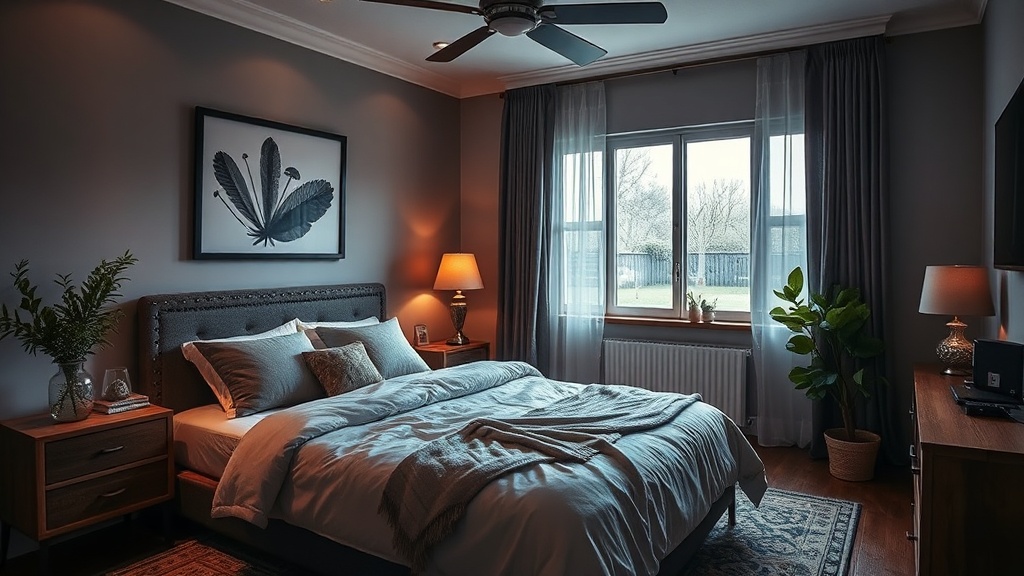
Why Your Guest Bedroom Feels Unwelcoming

Studies in environmental psychology suggest that a lack of tactile variety and predictable lighting is the primary reason human beings feel "on edge" in unfamiliar indoor spaces. In a guest bedroom, this translates to a sense of clinical detachment rather than hospitality. Most homeowners approach the guest room as a secondary storage unit or a minimalist afterthought, resulting in a space that feels more like a sterile hotel room or a neglected storage closet than a sanctuary. This guide examines the specific design failures—from lighting temperatures to textile weight—that make a guest room feel unwelcoming and provides technical solutions to transform it into a high-functioning, soulful retreat.
The Error of Uniform Lighting
The most frequent mistake in guest bedroom design is the reliance on a single, high-output overhead light fixture. A single source of light creates harsh, vertical shadows that emphasize the corners of the room, making the space feel cavernous and cold. To create a sense of intimacy, you must implement a layered lighting scheme that prioritizes warmth and varying heights.
Instead of a single ceiling fixture, aim for at least three distinct light sources. A bedside lamp with a linen shade provides soft, diffused light for reading, while a floor lamp in a corner can eliminate dark shadows that make a room feel uninvicultured. If you are working with a smaller footprint, consider wall-mounted sconces to free up surface area on nightstands.
- Color Temperature: Ensure all bulbs are within the 2700K to 3000K range. Anything higher (4000K+) will mimic the clinical feel of an office or a hospital, stripping the room of its domestic warmth.
- The Dimmer Factor: If you cannot install a dimmer switch, use smart bulbs like Philips Hue that allow you to adjust brightness via a smartphone.
- Task vs. Ambient: A dedicated reading light—perhaps a small, adjustable brass lamp—signals to the guest that the room is designed for their specific comfort, not just general visibility.
The Neglect of Textile Weight and Texture
A room that lacks textural depth feels visually "flat." When a guest enters a room and sees only smooth cotton sheets and a polyester duvet, the sensory experience is one of sterility. A well-designed guest room should utilize a hierarchy of fabrics to create a sense of depth and physical comfort.
The key is to move away from the "matching set" mentality. While a coordinated bedding set is easy to purchase, it lacks the character of a curated collection. Instead, layer your textiles to build a sense of weight and history. A high-thread-count cotton sheet provides the base, but it requires a heavy linen duvet or a wool throw to feel truly finished.
Consider the following layering technique:
- The Foundation: Use a high-quality mattress protector and a crisp, white cotton sheet. White is a standard for a reason; it communicates cleanliness and provides a neutral canvas.
- The Mid-Layer: Add a lightweight quilt or a coverlet. This adds a layer of insulation and a different tactile sensation.
- The Top Layer: A heavy, textured throw blanket—perhaps in a chunky knit or a heavy linen—adds visual weight to the foot of the bed.
- The Accents: Use velvet or heavy linen pillows to break up the smoothness of the bed. Avoid the "decorative pillow graveyard" where too many small pillows clutter the sleeping surface; two large sham pillows and one or two functional accent pillows are sufficient.
If you find that your bedroom organization is suffering from a lack of intentionality, you might also find value in understanding why your small bathroom feels cluttered, as the principles of spatial management and visual order apply across all domestic zones.
The Absence of Functional Surfaces
A guest often feels like an intruder when they have nowhere to put their personal belongings. A common mistake is providing a bed and a single chair, but neglecting the "landing zones" required for daily life. An unwelcoming room is often one that lacks the infrastructure for a guest to exist without being messy.
Every guest requires a designated place for three specific categories of items: electronics, hydration, and personal effects. If a guest has to sit on the edge of the bed to plug in their phone, or if they have to place their water glass on the floor because there is no nightstand, the room has failed its primary function.
Essential Landing Zones:
- The Nightstand: This is non-negotiable. It must be large enough to hold a lamp, a book, and a glass of water. If space is an issue, a small, sturdy pedestal or a floating shelf is better than nothing.
- The Luggage Spot: Guests rarely want to live out of a suitcase on the floor. A dedicated luggage rack or even a sturdy bench at the foot of the bed provides a sense of order and prevents the room from feeling chaotic.
- The Surface for Small Items: A small tray on a dresser or a dedicated corner of a desk provides a place for jewelry, watches, or glasses. Without this, these items inevitably end up scattered across the nightstand, creating visual noise.
The Psychological Impact of Scent and Sound
Design is not merely visual; it is a multi-sensory experience. An unwelcoming guest room often suffers from "sensory vacuum"—a state where the air feels stagnant and the room is unnaturally quiet or distractingly loud. To make a room feel inhabited and cared for, you must address the invisible elements of the environment.
Air quality and scent play a massive role in how a space is perceived. A room that smells of nothing can feel "dead," while a room that smells too strongly of artificial "ocean breeze" spray feels cheap. Aim for subtle, organic scents. A high-quality soy candle with notes of sandalwood, cedar, or amber, or a simple reed diffuser, provides a constant, low-level olfactory signature that feels sophisticated rather than synthetic.
Similarly, consider the acoustic environment. If the room is located near a high-traffic area of the house, the lack of soft surfaces will make every footstep sound like a drumbeat. Incorporating heavy drapery (such as velvet or blackout linen) serves two purposes: it manages light and acts as an acoustic dampener. This prevents the room from feeling "echoey" and provides a sense of seclusion. If the room is particularly quiet, a small, high-quality white noise machine or a dedicated speaker for ambient sounds can prevent the "deafening silence" that often makes guests feel uneasy in a new environment.
The Curated vs. The Cluttered
Finally, a guest room should not be a museum of your personal life, nor should it be a storage room for your seasonal decor. A room that is too highly personalized can make a guest feel like they are intruding on your private identity. Conversely, a room that is completely devoid of personality feels anonymous and cold.
The solution is curation. Instead of displaying your most intimate family photos or highly niche collections, select a few pieces of art that are aesthetically pleasing and universally evocative. A single, large-scale landscape print or a piece of abstract art with a calming color palette is far more effective than a gallery wall of personal snapshots.
Use books to add character. A small stack of art books or high-quality monographs on a coffee table or nightstand adds a sense of intellect and warmth without being overly personal. This is the same principle used in styling a coffee table: use objects to create a composed, intentional vignette that invites the eye to linger without demanding attention.
By focusing on these technical layers—light temperature, textile weight, functional surfaces, and sensory depth—you move beyond mere "decorating" and into the realm of true hospitality. A guest room should not just be a place to sleep; it should be a highly engineered environment designed to facilitate rest and psychological ease.