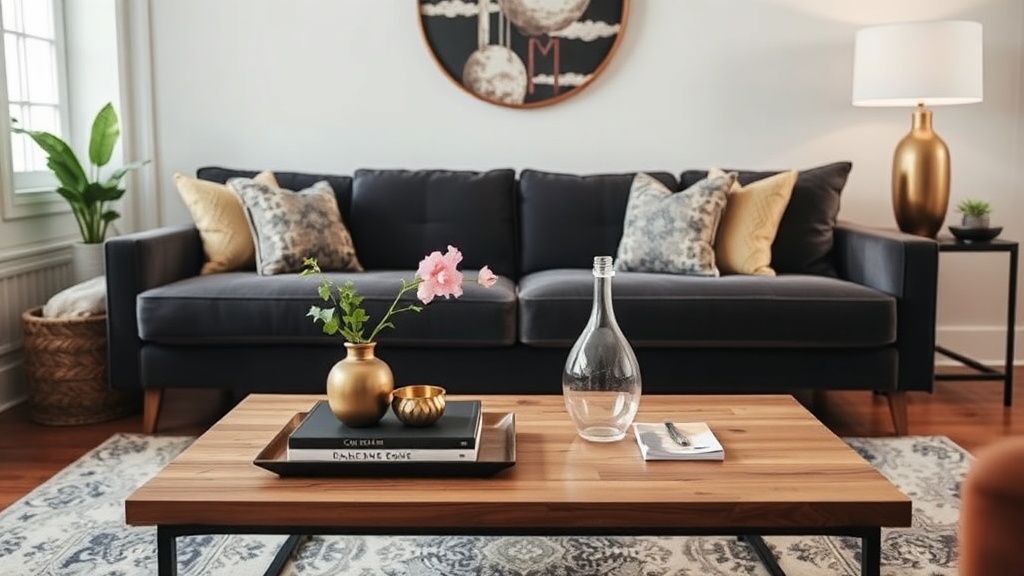
How to Style Your Coffee Table Like a Pro

A guest reaches for a glass of water, only to find it landing on a stack of mismatched coasters, or perhaps a pile of unread magazines that have begun to curl at the edges. The coffee table, intended as the anchor of the living room, has instead become a graveyard for remote controls, half-empty coasters, and clutter. This post provides a structural framework for styling a coffee table that balances aesthetic intention with functional utility. You will learn how to use scale, texture, and curation to transform a utilitarian surface into a focal point of your interior design.
The Foundation of Composition
Before adding a single object, you must understand the geometry of your space. A coffee table does not exist in a vacuum; it is a piece of furniture that must respond to the sofa and the rug beneath it. If your table is a heavy, dark oak piece, it requires substantial objects to prevent it from looking swallowed by the room. If it is a glass or acrylic piece, such as a Kartell Louis Ghost style table, the styling must be intentional so the objects do not appear to be floating aimlessly in mid-air.
The first step is to establish a base layer. This is often achieved through the use of a tray. A tray acts as a visual container, grouping disparate items together and preventing them up the table from looking like a collection of random debris. A Hay Tray in a matte finish or a heavy brass tray provides a defined boundary. When you use a tray, you are essentially creating a "room within a room" on the surface of the table.
The Rule of Three and Varying Heights
Flatness is the enemy of sophisticated styling. A common mistake is placing several objects of the same height next to one another, which creates a stagnant, uninteresting visual line. To avoid this, you must manipulate verticality. A successful coffee table composition utilizes a hierarchy of heights: low, medium, and high.
- Low: This is your foundation layer. Think of a heavy coffee table book or a low, wide ceramic bowl.
- Medium: This layer provides volume. A medium-sized candle or a small sculptural object fits here.
- High: This is your vertical anchor. A tall vase with branches, a sculptural candlestick, or a high-quality art book standing upright provides the necessary height to draw the eye upward.
The "Rule of Three" is a reliable heuristic. Grouping objects in odd numbers—specifically three—is more visually pleasing to the human eye than even numbers, which can feel too symmetrical or clinical. For example, pair a large coffee table book (low), a small brass object (medium), and a single tall stem in a glass vase (high). This creates a triangular silhouette that feels balanced rather than forced.
Selecting Your Elements
To achieve a curated look, you must move away from "sets" and toward "collections." A set of matching white ceramic vessels is predictable and lacks character. Instead, look for objects that possess a sense of history or a distinct tactile quality. The goal is to mix materials to create visual tension.
The Role of Books
Books are the most versatile tool in a stylist's kit. However, avoid the temptation to use books merely as filler. Select books with spines that reflect your interests or a sophisticated color palette. Large-format monographs—such as those from Taschen or Phaidon—are ideal because their weight and scale provide a sturdy base for other objects. You can stack two or three books horizontally to create a pedestal for a small sculpture or a candle, effectively adding a new level to your composition.
Texture and Materiality
A table that features only smooth surfaces will feel cold and uninviting. You need to introduce organic textures to ground the design. If your table is a sleek, polished marble surface, introduce a textured linen napkin or a rough-hewn stone bowl. If you have a wooden table, a smooth glass vase or a metallic tray will provide a necessary contrast.
Consider these material pairings for a balanced look:
Greenery and Life
Living elements soften the hard edges of furniture. However, avoid the "supermarket bouquet" look. Instead of a tightly packed, colorful floral arrangement, opt for something more architectural and sculptural. A single Monstera leaf in a tall vase or a few branches of dried Magnolia can make a significant impact without cluttering the surface. If you are concerned about maintenance, high-quality dried botanicals provide a permanent solution that maintains a sense of organic life.
Practicality vs. Aesthetics
A coffee table is a functional object. If it is too heavily styled, it becomes a "museum piece" that no one feels comfortable using. This is where the distinction between a "styled" table and a "cluttered" table becomes vital. To maintain a functional space, you must designate a "hidden" area for the items that are purely utilitarian.
Keep your remote controls, coasters, and actual drinking vessels in a dedicated, discreet location. A deep tray can hold a small stack of coasters and a candle, keeping them contained. If you find that your coffee table is constantly being overtaken by everyday items, it may be a sign that you need more storage in the surrounding area. Just as you would consider managing clutter in a small bathroom, you must manage the overflow in your living room to keep the coffee table looking intentional.
Common Pitfalls to Avoid
Even with the best intentions, it is easy to fall into certain design traps. Be wary of the following:
The "Too Much" Trap: It is tempting to add more objects to fill the space, but a sparse, well-curated table is always more impactful than a crowded one. If you feel the need to add more, you are likely lacking in scale rather than quantity. Increase the size of one object rather than adding three smaller ones.
The Lack of Negative Space: Negative space—the empty areas on the table—is just as important as the objects themselves. It allows the eye to rest and makes the items you have chosen stand out. If every square inch of your table is covered, the composition will feel suffocating.
Ignoring the Scale of the Room: A tiny, delicate tea set will look lost on a massive, heavy mahogany table. Conversely, a large sculptural piece might overwhelm a small, minimalist glass table. Always ensure the "weight" of your objects matches the "weight" of your furniture.
A Final Checklist for Styling
Before you step back to admire your work, run through this quick checklist to ensure the composition is successful:
- Is there a clear anchor? (e.g., a tray or a large book)
- Are there at least three different heights? (e.g., low, medium, high)
- Is there a mix of textures? (e.g., metal, glass, organic)
- Is there enough negative space? (e.g., can the eye "breathe"?)
- Does it feel lived-in but not messy?
Styling a coffee table is an iterative process. It is not a one-time task but an ongoing curation of your environment. As the seasons change, or as you acquire new pieces for your home, feel free to swap out a vase of fresh flowers for a sculptural branch or replace a summer linen tray with a heavier wood version. The goal is a surface that reflects a sense of order, intention, and timeless craft.
Steps
- 1
Start with a Foundation
- 2
Add Height with Books
- 3
Incorporate Organic Elements
- 4
Layer with Texture and Light