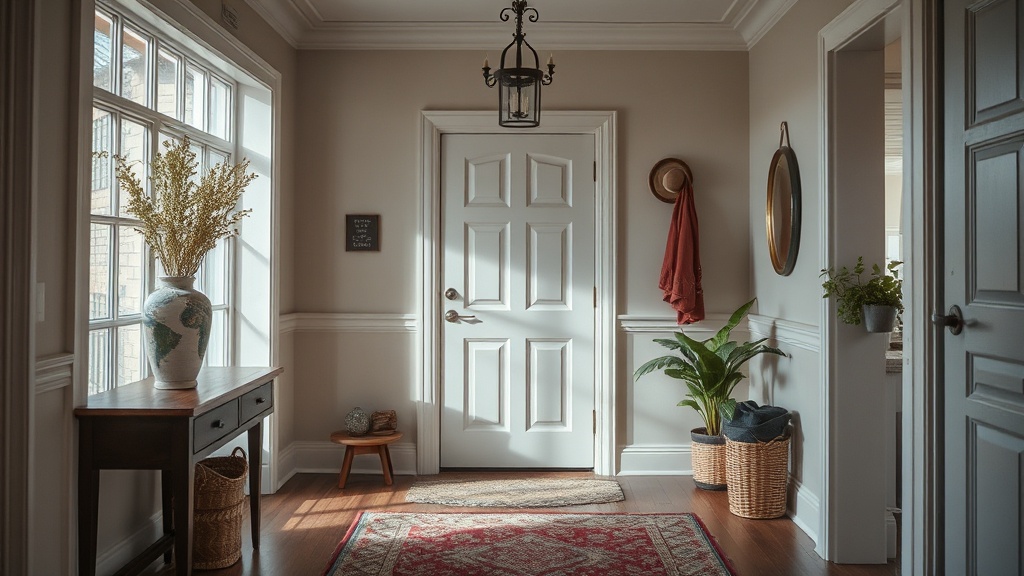
Why Your Entryway Always Feels Chaotic

Quick Tip
Assign a specific home for every small item like keys and mail to prevent surface clutter.
A pile of mail sits on a bent metal hook, a single stray sneaker occupies the floor, and a heavy coat hangs precariously off a chair. This is the visual friction of a dysfunctional entryway. Most people treat the entrance to their home as a mere transition zone, but it is actually the psychological threshold of your living space. When this area is chaotic, the sense of disorder bleeds into the rest of your home. To fix it, you must move away from "temporary storage" and toward intentional, permanent architectural solutions.
The Problem of Undefined Zones
Chaos occurs when a space lacks a specific "home" for high-frequency objects. If you don't have a dedicated vessel for keys, they will inevitably end up on a dining table or a kitchen counter. This is the same reason kitchen countertops often look messy; without a designated boundary, items drift.
To solve this, implement the Rule of Three for entryway utility:
- The Landing Strip: A small, solid surface—such as a marble tray or a walnut console table—strictly for keys, wallets, and sunglasses.
- The Vertical Anchor: A sturdy wall-mounted system. Avoid cheap plastic hooks; instead, opt for heavy brass hooks or a solid oak peg rail.
- The Hidden Bin: A woven basket or a sleek metal bin for items that don't possess aesthetic value, such as umbrellas or dog leashes.
Prioritize Scale and Materiality
A common mistake is choosing furniture that is too small for the volume of items you own. A tiny, spindly shoe rack cannot handle three pairs of heavy boots and a family of four. This creates visual "noise" as items overflow the boundaries of the furniture.
Choose pieces with weight and intent. A heavy stone plinth or a substantial wooden bench provides a sense of permanence. When an object feels grounded, the items placed upon it feel organized rather than discarded. If your entryway is narrow, skip the bulky console table and use a floating shelf in a dark finish, like blackened steel, to maintain a sense of floor space while providing a functional surface.
The Quick Fix Checklist
- Audit your hooks: Ensure every hook is spaced at least 6 inches apart to prevent clothing from bunching.
- Define the floor: Use a durable, high-contrast runner—perhaps a jute rug or a geometric patterned Kilim—to visually "box in" the entryway zone.
- Contain the mail: Replace the loose pile with a dedicated letter tray or a sleek linen-bound box.