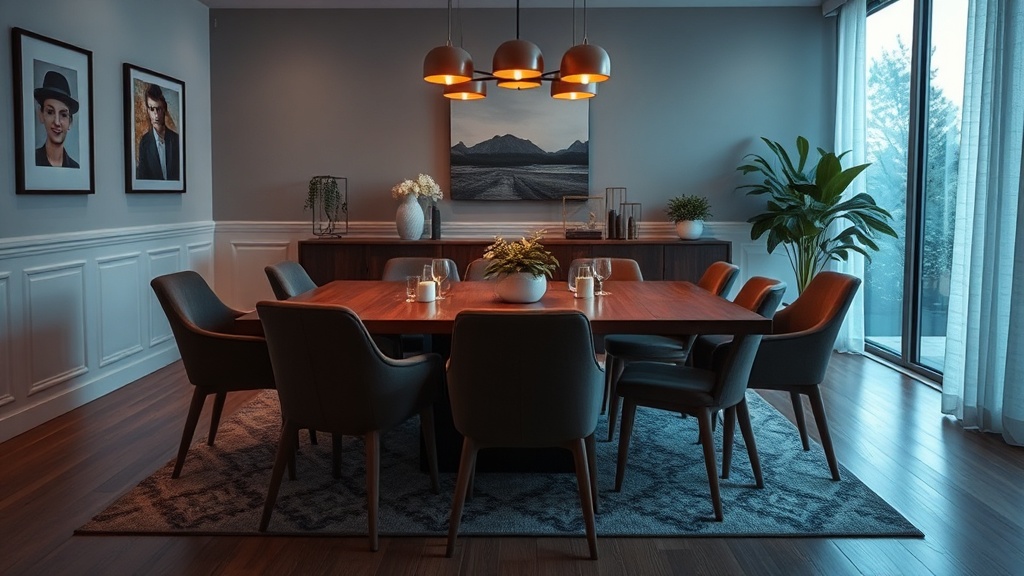
Why Your Dining Room Feels Awkward and Uncomfortable

A dinner party is underway in a high-ceilinged apartment in Marylebone. The guests are seated around a heavy, dark oak table, but the conversation is flagging. People are leaning forward, straining to hear one another, or shifting uncomfortably in their seats. The lighting is too bright, the chairs are too rigid, and the vast expanse of the room feels cavernous and disconnected from the table. This is not a failure of hospitality; it is a failure of spatial logic. Most dining rooms feel awkward because they are treated as static showrooms rather than functional environments designed for human interaction. This guide identifies the structural, lighting, and tactile errors that turn a dining space into an uncomfortable zone and provides practical solutions to fix them.
The Scale Mismatch: Furniture Proportions and Spatial Flow
The most common reason a dining room feels "off" is a fundamental misunderstanding of scale. A room can be filled with expensive furniture, but if the proportions are incorrect, the space will feel either claustrophobic or hollow. This often happens when a dining set is chosen in isolation from the room's dimensions.
The Table-to-Room Ratio
A dining table should never dominate the room to the point where movement is restricted, nor should it look like a lonely island in a sea of floor space. To ensure proper flow, you must maintain a minimum of 36 inches (91cm) between the edge of the table and the nearest wall or piece of furniture. This allows enough room for a person to pull out a chair and walk behind a seated guest without scraping against the wall. If you are working with a smaller footprint, consider a round pedestal table, such as a Tulip Table design, which eliminates corner obstructions and improves circulation.
The Chair Weight Problem
Visual weight is as important as physical dimensions. If you have a massive, heavy mahogany table paired with spindly, lightweight metal bistro chairs, the room will feel top-heavy and unbalanced. Conversely, pairing a heavy stone table with oversized upholstered armchairs in a small room will make the space feel cramped. Aim for a balance of visual weight. If your table is substantial, use chairs with a slightly more delicate silhouette, like a Wishbone Chair, to allow sightlines to pass through the furniture, making the room feel larger.
The Lighting Error: Avoiding the Overhead Spotlight
Lighting is the most frequent culprit behind a dining room that feels "clinical" or "uninviting." Most people rely on a single, powerful pendant light hanging directly over the table. While this provides illumination, it often creates a harsh "pool" of light that leaves the rest of the room in pitch darkness, making the edges of the room feel disconnected and the atmosphere feel stark.
The Three-Layer Approach
To create a sophisticated dining environment, you must move away from a single light source and implement a layered approach. This involves three distinct types of light:
- Ambient Lighting: This is your general light source. Instead of a bright overhead light, use dimmable recessed lighting or a soft ceiling fixture to provide a base level of light.
- Task Lighting: This is your pendant or chandelier. It should hang low enough to illuminate the table—typically 30 to 36 inches above the surface—but it must be dimmable. A non-dimmable light is the enemy of a long dinner.
- Accent Lighting: This is where you add character. Use a small table lamp on a sideboard or a picture light over a piece of art to draw the eye to the periphery of the room.
The Color Temperature Factor
Check your bulbs. If you are using "Daylight" or "Cool White" bulbs (5000K+), your dining room will feel like a cafeteria. For a dining space, you should strictly use "Warm White" bulbs (2700K to 3000K). This warmth mimics the glow of candlelight and encourages relaxation. If you are using a modern architectural pendant, ensure the light is diffused rather than direct to avoid harsh shadows on your guests' faces.
The Sensory Gap: Texture and Acoustic Comfort
A room that looks beautiful in a photograph can still feel uncomfortable in person if it lacks tactile warmth. A dining room consisting entirely of hard surfaces—hardwood floors, a stone table, and glass windows—will suffer from poor acoustics. Sound bounces off these surfaces, creating a "clatter" that makes conversation difficult and can even cause physical fatigue during long meals.
Softening the Soundscape
To fix an acoustic imbalance, you must introduce soft, sound-absorbing materials. A large area rug is the most effective tool here. A rug should be large enough that all chair legs remain on the rug even when pulled out. This prevents the "scraping" sound of chair legs on wood and absorbs the echoes of voices. If a rug isn't an option, consider heavy linen drapery or even textured wall coverings like grasscloth wallpaper to break up sound waves.
Tactile Variety
Comfort is also a matter of touch. A room with only smooth, cold surfaces feels sterile. Introduce a variety of textures to create a sense of "lived-in" luxury. This could be a linen tablecloth, leather-bound coasters, or velvet upholstery on the dining chairs. If your dining room feels as cold and uninviting as your living room, it is likely because you haven't introduced enough organic textures to soften the edges of the room.
The Decor Dilemma: The Importance of Composition
Many people treat the dining room sideboard or the center of the table as a place to store "clutter." When a surface is either completely empty or overly crowded, it creates a sense of visual tension. A well-designed dining room uses objects to create focal points without obstructing the utility of the space.
The Centerpiece Rule
A common mistake is using a centerpiece that is too tall. A centerpiece should never exceed the eye level of the seated guests. If guests have to lean around a massive floral arrangement or a tall sculptural piece to see the person across from them, the social flow is broken. Aim for a low, horizontal arrangement. A long, low wooden bowl filled with seasonal fruit or a collection of varying heights of tapered candles is a much more effective way to anchor the table.
The Sideboard Composition
The sideboard or buffet is often an afterthought, but it is essential for balancing the room. Instead of lining it with small, disparate trinkets, use a more intentional grouping. Apply the rule of three by grouping objects of varying heights: a tall lamp, a medium-sized stack of art books, and a small sculptural object. This creates a visual hierarchy that feels curated rather than accidental. This prevents the sideboard from looking like a storage unit and turns it into a design element.
Practical Checklist for a Comfortable Dining Room
Before your next gathering, walk through your dining room and ask these specific questions:
- Can I move freely? Is there at least 36 inches of space between the table and the walls?
- Can I see everyone? Are the centerpieces low enough to allow eye contact across the table?
- Is the light adjustable? Can I dim the lights to change the mood from "functional" to "intimate"?
- Is there too much "hard" surface? Have I added a rug or drapery to absorb sound and soften the room?
- Are the proportions balanced? Does the weight of the table match the weight of the chairs?
A dining room should be a choreographed environment. By paying attention to the precision of scale, the layers of light, and the texture of the surfaces, you transform a mere eating area into a space designed for the art of conversation.