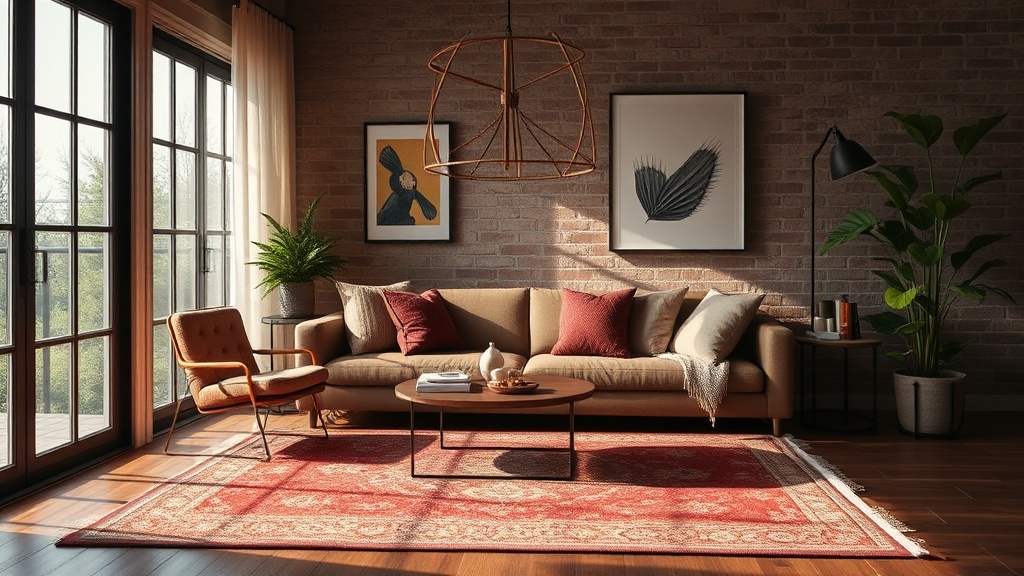
How to Choose the Right Rug for Your Space

A client once sat in a perfectly curated mid-century modern living room, surrounded by original Eames chairs and a low-slung walnut sideboard, yet she felt the room was "floating." The issue wasn't the furniture or the lighting; it was a rug that was exactly two feet too small for the seating arrangement. The scale was off, the texture was too thin for the heavy wood, and the visual weight of the room had collapsed into the center. This guide provides a technical framework for selecting a rug that anchors your furniture, respects your architectural scale, and survives the practical realities of your lifestyle.
Determine the Scale and Placement
The most frequent error in interior design is under-sizing the rug. A rug that is too small makes a room look disjointly fragmented. To avoid this, you must understand the relationship between your rug and your furniture legs. There are three primary standards for placement depending on the room's function and the desired level of formality.
The All-In Approach
In a formal living room, the goal is to create a cohesive "island" of comfort. For this, every piece of furniture—the sofa, the accent chairs, and even the side tables—should have at least its front legs resting on the rug. This creates a sense of unity and prevents the furniture from looking like it is drifting toward the walls. This method works best in large, open-plan spaces where you need to define a specific zone within a larger room.
The Front-Leg Approach
This is the most common standard for contemporary living rooms. Here, only the front legs of the sofa and any armchairs rest on the rug, while the back legs remain on the bare floor. This technique is effective for medium-sized rooms because it creates a visual connection between the seating group and the rug without requiring a massive, expensive textile. It offers a balanced look that feels both grounded and airy.
The Floating Approach
In a dining room or a low-traffic area, you may choose to have no furniture legs touching the rug at all. However, this is a high-risk maneuver. If you choose this, the rug must be significantly larger than the table and the chairs to ensure that when a person pulls a chair out to sit, the back legs do not catch on the edge of the textile. A chair caught on a rug edge is a recipe for a damaged rug and a broken chair leg.
Before purchasing, consult living room layouts that actually work to ensure your rug dimensions complement your specific furniture arrangement.
Select Material Based on Traffic and Durability
A rug is a functional tool, not just a visual one. The material you choose dictates how much maintenance you will perform and how long the piece will remain aesthetically relevant. You must categorize your rooms by "traffic intensity" before looking at patterns.
- High-Traffic Areas (Hallways, Entryways, Playrooms): For these zones, prioritize synthetic fibers like polypropylene or nylon. These are engineered to be stain-resistant and can withstand the abrasive friction of heavy foot traffic. If you prefer natural fibers, look for Sisal or Seagrass; they are incredibly durable, though they can be harder to clean if liquids are spilled.
- Low-to-Medium Traffic Areas (Primary Bedrooms, Formal Sitting Rooms): This is where you invest in high-quality natural fibers. Wool is the gold standard for durability and luxury. It is naturally flame-retardant, resilient to crushing (it bounces back after weight is removed), and has a high level of soil resistance. Silk or viscose rugs are beautiful but are strictly for decorative use in low-traffic areas, as they lack the structural integrity to handle regular vacuuming.
- Texture-Focused Spaces (Reading Nooks, Accent Areas): If the rug is a secondary element, consider a Jute rug for a tactile, organic feel. Jute adds a rustic, grounded quality to a room but should be kept away from moisture, as it can absorb humidity and even grow mold in damp environments.
Understand Weave and Pile Height
The "pile" refers to the height of the fibers. The pile height changes the ergonomics of the room and the way light interacts with the surface.
Low Pile and Flatweaves
Flatweaves (such as Kilim or Dhurrie rugs) have no pile at all. They are excellent for dining rooms because they are easy to clean and don't interfere with the movement of chairs. Low-pile rugs (under 0.25 inches) are ideal for high-traffic hallways where you want a streamlined look and easy vacuuming. They are also much more stable under heavy furniture.
Medium to High Pile
Plush, high-pile rugs (often called "shag") offer maximum comfort and acoustic dampness. These are perfect for bedrooms or cozy dens. However, they come with a caveat: they trap dust and hair more easily and can be difficult to walk on with high heels or heavy furniture. If you choose a high-pile rug, ensure it is placed in a zone where it won't be subjected to constant mechanical stress.
Color and Pattern Strategy
The rug acts as the visual foundation of a room. It can either be the "anchor" that stays quiet in the background or the "statement" that dictates the room's energy. To choose correctly, you must decide which element of your room is the protagonist.
The Neutral Anchor: If you have a bold piece of art, a vibrant velvet sofa, or an intricate wallpaper, choose a rug with a subtle, monochromatic texture. A solid-colored wool rug in a way-back tone (like oatmeal, charcoal, or sage) provides a sophisticated base without competing for attention. This approach is timeless and prevents the room from feeling "over-designed."
The Statement Piece: If your furniture is minimalist and your walls are neutral, the rug is your opportunity to introduce character. A geometric Persian rug or a large-scale abstract pattern can act as the room's centerpiece. When using a patterned rug, ensure the scale of the pattern is large enough to be seen. A tiny, busy pattern can often look cluttered and "cheap" from a distance; a larger, more intentional motif feels more architectural and high-end.
"A rug should never compete with the furniture; it should frame it. If the rug and the sofa are both fighting for attention, the room will feel unresolved."
The Practicalities of Maintenance and Longevity
A well-chosen rug is an investment in the longevity of your interior. To ensure your selection remains a functional part of your home, consider these three technical requirements:
- The Rug Pad: Never place a rug directly on a hard floor without a pad. A high-quality felt or rubberized pad serves two purposes: it prevents the rug from sliding (a safety necessity) and it provides a layer of cushioning that protects the rug fibers from being crushed by the weight of the furniture.
- Color Fastness: If your room receives direct sunlight, be wary of vegetable-dyed rugs. Natural dyes can fade significantly under UV exposure. For sun-drenched living rooms, look for "colorfast" or "solution-dyed" synthetic fibers, or high-quality wool, which holds color much better than silk or cotton.
- Seasonal Rotation: To prevent "pathways"—the worn-down areas caused by constant walking—rotate your rug 180 degrees every six to twelve months. This ensures even wear and prevents permanent indentations from heavy furniture legs.
Choosing a rug is a balance of geometry, materiality, and lifestyle. By prioritizing scale over aesthetic impulse and durability over fleeting trends, you create a space that feels grounded, intentional, and truly finished.
Steps
- 1
Measure Your Floor Space
- 2
Consider the Room Function
- 3
Select the Right Material
- 4
Match Your Existing Color Palette