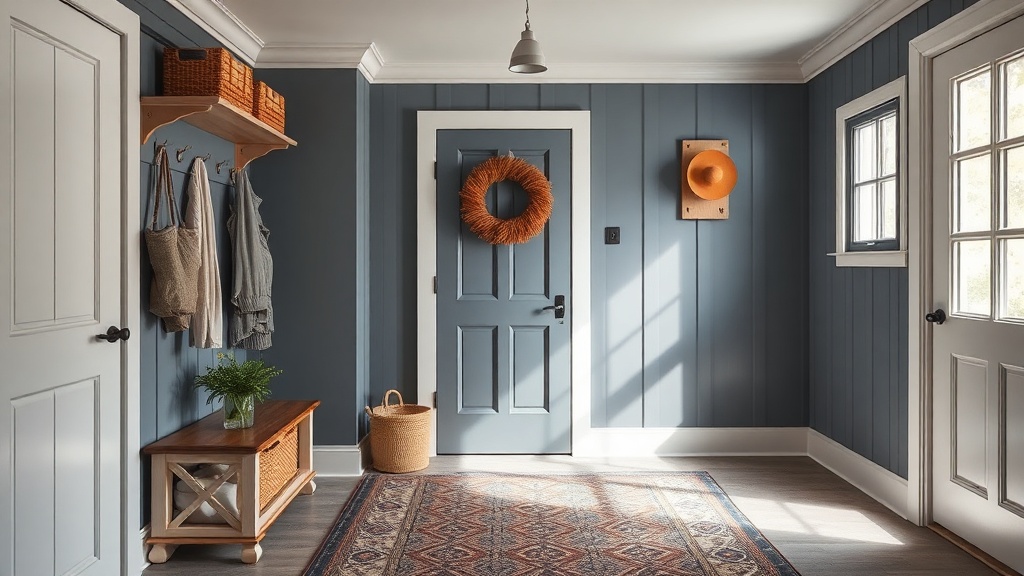
Creating a Calm and Functional Mudroom Entryway

The average household loses approximately 20 minutes per day searching for misplaced keys, mail, or footwear—a cumulative loss of over 120 hours per year. This friction occurs most frequently in the entryway, a transitional zone that is often neglected in favor of more "social" rooms. A well-designed mudroom serves as a functional buffer between the chaos of the outside world and the sanctuary of the home. This guide outlines how to engineer a mudroom that prioritizes utility through high-quality materials and disciplined organization, ensuring your transition into the home is seamless rather than stressful.
The Architecture of Utility
A successful mudroom is not defined by aesthetic trends, but by its ability to handle high-frequency use. To achieve this, you must move beyond the flimsy plastic hooks found in big-box retailers and instead focus on structural integrity. The goal is to create a dedicated station for every category of outdoor gear: footwear, outerwear, bags, and small essentials.
Start by identifying your primary "zones of friction." If your family frequently leaves wet umbrellas by the door, you require a dedicated drainage area. If you are a runner, you need a ventilated space for damp shoes. By mapping these behaviors, you can design a space that anticipates needs rather than reacting to clutter.
Prioritize Durable Materials
Because the mudroom is a high-traffic, high-moisture area, your material choices must be pragmatic. Avoid delicate hardwoods like cherry or maple, which can warp or stain when exposed to moisture. Instead, opt for materials that age gracefully under duress.
- Flooring: Porcelain tile or slate is superior to hardwood or carpet. Porcelain mimics the look of natural stone but offers high slip resistance and near-total impermeability. For a more textured, traditional look, consider brick pavers, which provide excellent grip and a sense of permanence.
- Cabinetry: If you are installing built-in lockers, use a high-quality plywood core rather than particle board. Particle board swells and disintegrates when exposed to even minor moisture from damp coats.
- Hardware: Brass or blackened steel hardware is ideal. These materials develop a patina over time, which masks the inevitable wear and tear of daily use.
The Three Pillars of Mudroom Organization
Organization in a mudroom fails when it relies on "hiding" things rather than "placing" them. A truly functional space uses a system of visible, accessible, and labeled storage. To achieve this, organize your space into three distinct vertical layers.
The Lower Layer: Footwear and Heavy Items
The bottom third of your mudroom should be dedicated to heavy and often dirty items. This is the area most prone to moisture and grit. Instead of a simple shoe rack, consider a built-in bench with deep cubbies. This provides a sturdy seat for putting on shoes while offering substantial storage for boots or seasonal footwear.
For heavy-duty use, look for metal boot trays with raised edges. A tray made of galvanized steel or heavy-duty rubber is essential for catching melting snow or mud, preventing it from migrating into the rest of your house. If space allows, a dedicated nook for a vacuum or a heavy mop prevents these bulky tools from cluttering your primary utility closet.
The Middle Layer: Daily Essentials and Transitions
The middle layer is the most critical for daily movement. This is where your hooks, benches, and small-scale storage reside. The height of your hooks should be intentional: higher hooks for long coats and lower hooks for children’s backpacks or smaller bags.
Avoid the mistake of using a single, long rod. Instead, use individual heavy-duty hooks. A single rod often results in a "avalanche" of clothes when one item is pulled away. Individual hooks, such as those from brands like Schoolhouse or Rejuvenation, provide more control and prevent the visual clutter of overlapping garments. For smaller items like keys, sunglasses, or mail, integrate a small console table or a floating shelf with a dedicated tray. This creates a "landing strip" for the items that usually end up lost in a junk drawer.
The Upper Layer: Seasonal and Long-Term Storage
The upper layer should be reserved for items that are not used daily. This is the place for hats, scarves, and seasonal gear. High-mounted cabinets or open shelving with uniform baskets are the most efficient way to manage this space. Using baskets—specifically woven seagrass or sturdy wire—allows you to tuck away clutter while maintaining a cohesive aesthetic. This verticality ensures that your daily-use area remains clear and unencumbered.
Lighting and Visual Clarity
A dark mudroom feels cramped and disorganized. Because these spaces are often tucked away near secondary entrances or windowless hallways, lighting is a functional necessity, not just an aesthetic choice. A well-lit entryway makes it easier to find small objects and provides a sense of safety during evening arrivals.
Avoid relying solely on a single overhead light. Instead, layer your lighting. A combination of a central pendant or flush-mount fixture and targeted task lighting—such as LED strips under a shelf or a small sconce near the mirror—will illuminate the specific zones where you need it most. If your mudroom has a window, utilize natural light by choosing a mirror with a substantial frame. A mirror does more than check your reflection; it bounces light into the corners and makes a small footprint feel much larger.
When selecting colors, remember that the mudroom is a transition zone. While it can handle bolder colors than a living room, you want to avoid colors that feel too "precious." A muted sage, a deep navy, or a warm terracotta can add character without making the space feel visually heavy. If you are working with a very small footprint, effective color schemes for small spaces can help the room feel expansive rather than claustrophobic.
Maintaining the System
The most beautiful mudroom in the world will fail if it does not have a maintenance routine. A functional design is a living system that requires regular recalibration. To prevent the buildup of clutter, implement a "one-in, one-out" rule for seasonal items. When the summer heat arrives, the heavy winter coats should be moved to long-term storage immediately, freeing up the hooks for lighter layers.
Set a weekly "reset" time to clear the landing strip. This involves emptying the key trays, checking the mail, and ensuring that no stray items have migrated from the entryway into the main living areas. By treating the mudroom as a high-performance tool rather than just a storage closet, you ensure it continues to serve its primary purpose: facilitating a calm, orderly transition into your home.
"Design is not just about how something looks, but how it functions under the weight of daily life. A mudroom should be a machine for living, built with the durability of a workshop and the elegance of a curated gallery."
By focusing on high-quality materials, vertical organization, and strategic lighting, you can transform a chaotic entryway into a disciplined, functional space that preserves the tranquility of your home.