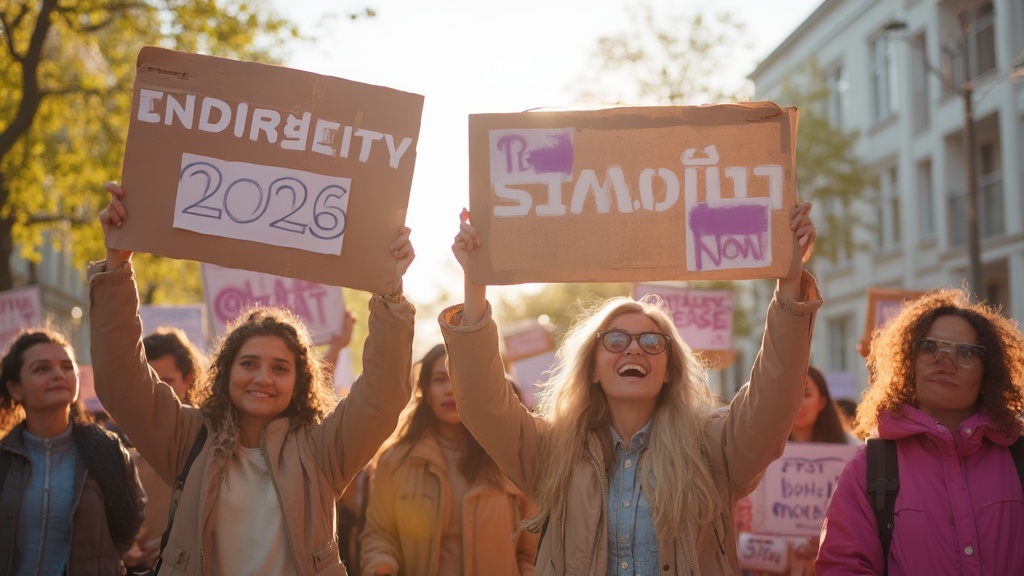
Women's Day 2026: Design, Policy & Grassroots Action

Why does a design‑focused blog care about International Women’s Day? Because the same intentionality we demand of typefaces and materials should apply to the structures that shape our lives—law, economics, and public space. On March 8 2026, the world pauses to celebrate progress, but the conversation must keep moving toward tangible, design‑driven change.
What does International Women’s Day mean in 2026?
International Women’s Day (IWD) began in 1911 as a protest for suffrage. Today it’s a global rally point for gender equality, marked by protests, policy announcements, and cultural events. In 2026 the theme, "Equality by Design," was chosen by the UN to spotlight how the built environment and visual culture reinforce or dismantle gender bias.
How are grassroots movements reshaping gender equity?
Across continents, small‑scale initiatives are using design principles to make spaces safer and economies fairer.
- Community‑crafted safe‑route maps. In Tehran, Iranian‑American activists have produced open‑source wayfinding posters that highlight well‑lit paths for women traveling after dark. The posters blend minimalist typography with bold color contrasts—a reminder that clarity can be a protective tool.
- Co‑ops for women‑owned makers. Berlin’s "She Designed Your Screen" collective launched a micro‑factory that supplies sustainably sourced hardware components to female entrepreneurs, echoing the "ugly‑useful" ethos Julian champions.
- Design‑led financial literacy workshops. In Detroit, a pop‑up studio teaches women how to read balance sheets using visual analogies drawn from Swiss grid systems. Participants report a 23 % increase in confidence handling personal budgets (source: AP News, March 2026).
Which policy wins are worth celebrating?
Legislation often lags behind activism, but 2026 has delivered a few noteworthy victories:
- EU Gender Pay Transparency Directive. Companies with over 250 employees must publish gender‑pay gaps in a standardized visual format—think of it as an infographic mandated by law.
- US Infrastructure Bill’s "Safe Streets for All" provision. Funding is earmarked for better lighting, crosswalk design, and gender‑sensitive urban planning.
- South Korea’s childcare subsidy redesign. The new scheme allocates funds based on a matrix that accounts for single‑parent households, reducing gender‑biased assumptions about caregiving.
What can designers do right now?
Designers sit at the intersection of aesthetics and function. Here are three concrete actions you can take this spring:
- Audit your own projects for gender bias. Ask: Who is this space for? Who is excluded? Use a simple checklist (see sidebar).
- Partner with local women’s groups. Offer pro‑bono visual identity work for grassroots campaigns—your typography can become a rallying cry.
- Make your studio a safe space. Implement transparent salary bands, inclusive language in contracts, and flexible hours that respect caregiving responsibilities.
Where can I learn more?
For deeper dives, check out these posts that intersect design and social impact:
- Emerging Design Studios to Watch in 2026 — many are women‑led and focus on community‑centric projects.
- Sustainable Exhibition Curation: Lessons from Berlin Design Week — a case study on inclusive exhibition design.
- The Honesty of Small Things — a reminder that even tiny gestures, like a thoughtfully designed pamphlet, can carry political weight.
Takeaway
International Women’s Day isn’t a one‑day checklist; it’s a call to embed equality into the very fabric of our designs, policies, and daily habits. By leveraging the same intentional rigor we apply to type, material, and spatial rhythm, we can help craft a world where gender equity is as obvious as a well‑aligned grid.
FAQs
- What is the 2026 IWD theme? "Equality by Design" — emphasizing how design choices affect gender equity.
- How can I support women‑owned design studios? Purchase their work, share their stories, and offer collaborative projects that respect their creative autonomy.
- Where can I find resources for safe‑route mapping? The open‑source Women‑Safe‑Routes repository on GitHub provides templates and guidelines.