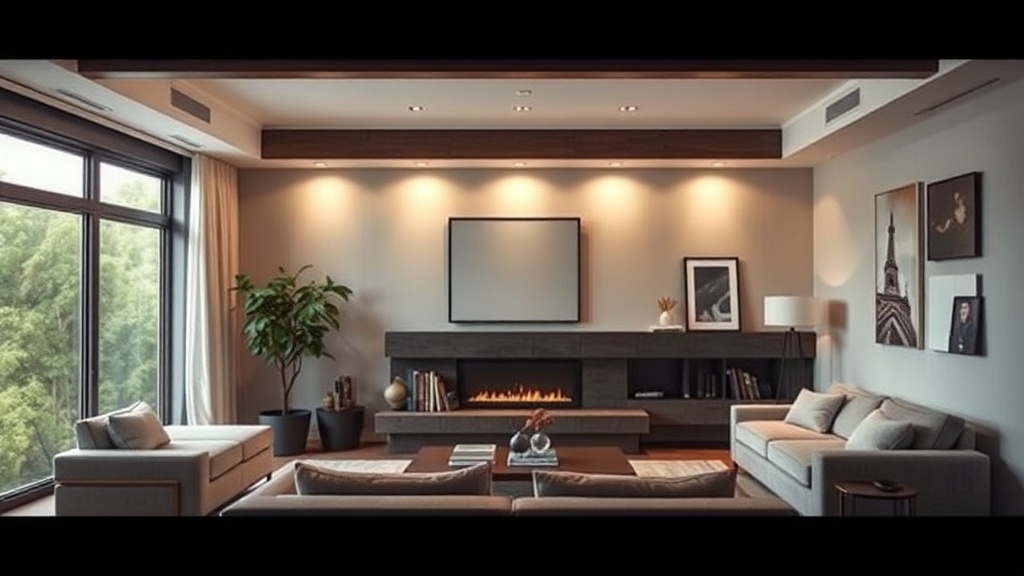
Why Your Living Room Lacks Depth and How to Fix It

Why does my living room feel flat?
Have you ever walked into a room that looks perfectly fine on paper—the furniture matches the color palette, the rug is centered, and the layout follows the rules—yet something feels fundamentally hollow? It's a common frustration. Most people mistake "coordinated" for "designed." They buy a set from a single showroom and wonder why the result feels like a hotel lobby rather than a home. The problem isn't a lack of money; it's a lack of tension. A room without tension is a room without a soul.
To create a space that actually holds interest, you must move away from the idea of perfection. A well-designed room relies on the interplay of opposites: hard against soft, smooth against rough, light against dark. If every surface in your living room is a matte, mid-century modern velvet sofa, you haven't created a style—you've created a vacuum. We need to look at how texture, scale, and history work together to prevent that flat, lifeless feeling.
How do I use texture to add character?
Texture is the silent language of interior design. It's what makes a room feel tactile and lived-in. When a room feels "flat," it's often because the eye has nothing to grab onto. You've relied too heavily on visual patterns and not enough on physical ones. To fix this, think about the friction between materials. A smooth, polished marble coffee table is much more interesting when it sits atop a high-pile, slightly irregular wool rug.
Consider these three layers of texture:
- The Foundational Layer: This is your large-scale texture—think linen curtains, heavy drapery, or a thick jute rug. These elements set the stage for the room's weight.
- The Mid-Tone Layer: This involves your upholstery and larger furniture pieces. Mixing a leather armchair with a linen sofa prevents the room from feeling one-note.
- The Accent Layer: This is where the small, high-contrast details live. A ceramic vase with a gritty, unglazed finish next to a glass lamp, or a heavy brass tray on a wooden side table.
Don't be afraid of the "imperfect." A hand-thrown ceramic bowl or a slightly weathered wooden stool adds a sense of time and human touch that a mass-produced, perfectly smooth object simply cannot replicate. If you want to see how high-end designers approach material studies, look at the way Architectural Digest documents the use of natural stone and raw timber in modern homes.
Can scale and proportion solve a boring layout?
One of the biggest mistakes I see is the fear of size. People tend to buy "safe" furniture—pieces that fit the dimensions of the room but don't command the space. This results in a room that feels cluttered but empty. A single, oversized piece of art can do more for a room's energy than a dozen small, mismatched frames. If your walls feel vacant, it’s likely because your art is too small for the scale of the room.
The trick is to find a balance between the monumental and the delicate. If you have a massive, heavy sectional sofa, you need something light—perhaps a glass-topped table or slender, tapered legs on your side tables—to prevent the room from feeling heavy or suffocating. It's about creating a visual rhythm. If every piece of furniture is the same height, your eyes will slide right over the room without stopping. You need height variation—a tall floor lamp, a low coffee table, and medium-height bookshelves—to keep the gaze moving.
What is the best way to mix old and new furniture?
The most vibrant homes aren't curated from a single catalog; they are collected over time. The "new-meets-old" approach is the most effective way to avoid the sterile look of a showroom. If everything in your room is brand new, the space lacks a sense of history. It feels temporary. To avoid this, try to introduce one or two "anchor" pieces that feel aged or traditional.
An antique wooden chest used as a coffee table provides a sense of weight and permanence that a modern, white-lacquered table cannot. The key is to ensure the pieces speak the same language, even if they come from different eras. A minimalist, modern sofa can look stunning next to a vintage, ornate rug. The contrast creates a conversation. This isn't about making the room look like a museum; it's about making it look like a home that has evolved.
When sourcing these pieces, don't just look at the latest trends. Look at the craftsmanship. A chair with a hand-carved frame or a table with visible joinery tells a story. You can find incredible inspiration for these types of curated spaces through the archives at Vogue Design, which often highlights the intersection of classicism and modernism.
Finally, remember that lighting is the final layer of depth. If you are relying on a single overhead light, you are killing your room's potential. A room needs multiple light sources at different heights to create shadows and highlights. A floor lamp for reading, a small table lamp for warmth, and perhaps even a candle or two. Light should be used to sculpt the space, not just to illuminate it. Without shadows, there is no depth, and without depth, your room will always feel two-dimensional.