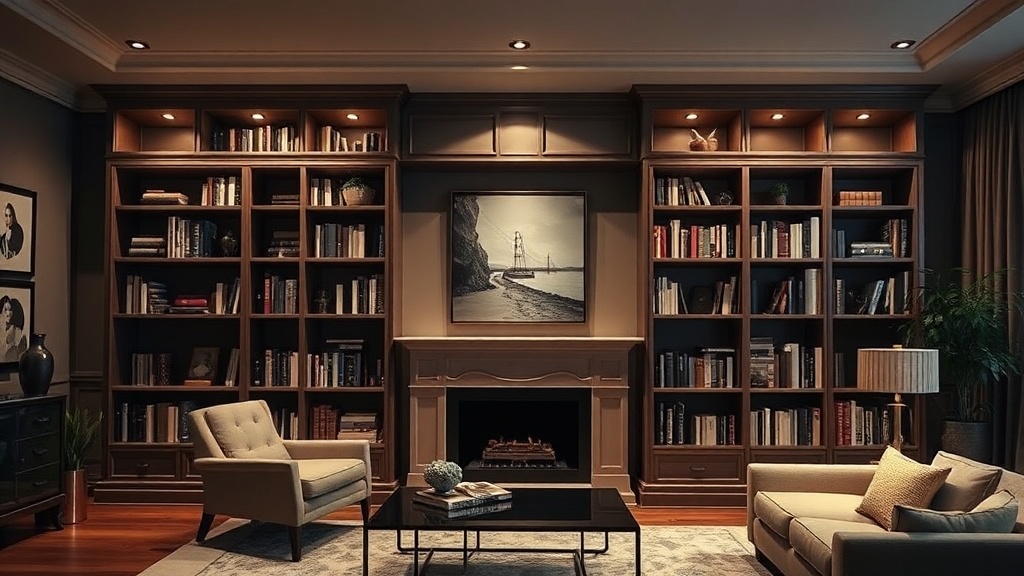
Why Built-In Bookcases Aren't Always the Answer (And When Freestanding Wins)

When did we decide that permanence equals sophistication?
Scroll through any design magazine or renovation show and you'll hear the same refrain: "We're adding custom built-ins for storage and character." It's presented as the ultimate upgrade—the marker of a finished, grown-up home. But this assumption deserves scrutiny. Built-in cabinetry isn't inherently superior to freestanding furniture, and in many cases, it's a costly decision that limits your flexibility for years to come. The truth is that a well-chosen antique bookcase or a modular shelving system often serves both your space and your sanity better than anything nailed to the wall. This isn't about rejecting built-ins entirely—it's about questioning the automatic assumption that custom carpentry is always the right choice.
The modern obsession with built-ins traces back to a specific design era. In the early 2000s, as open-concept living exploded and square footage shrank, homeowners sought ways to maximize every inch. Built-ins promised seamless integration, clean lines, and that coveted "custom" aesthetic. Real estate listings began highlighting them as premium features. Soon, what started as a practical solution for awkward spaces became a default recommendation regardless of need. But here's what gets lost in that narrative: flexibility matters. Your life changes. Your tastes evolve. That perfect niche for a built-in desk might become obsolete when you switch to remote work. Those shelves designed for your television collection look silly in the streaming age. Freestanding furniture moves with you—literally and figuratively.
What are the real drawbacks of built-in cabinetry?
Let's talk numbers first. Quality built-ins aren't cheap. You're looking at $500 to $1,200 per linear foot for custom work—often more in high-cost markets. For a full wall of shelving, that easily hits five figures. And that's just the build. Installation is disruptive, dusty, and requires skilled tradespeople who are increasingly difficult to book. Compare that to a solid wood bookcase from a reputable maker: even high-end pieces run $800 to $3,000, arrive assembled or in manageable pieces, and can be positioned exactly where you want them. If you hate the placement? Move it. If you move homes? Take it with you. The math isn't just about upfront cost—it's about lifespan value and optionality.
But the financial argument is only part of the story. Built-ins create spatial rigidity that's rarely discussed. That window seat with storage beneath it seems charming until you realize it dictates your furniture arrangement for the next decade. The desk built into that awkward corner niche works great—until you need to accommodate two monitors and realize the depth is six inches too shallow. Built-ins commit you to specific dimensions, specific functions, and specific traffic flows. They remove the experimentation phase that makes a house feel lived-in rather than staged. Great rooms evolve through trial and error: shifting the sofa, angling the armchair, discovering that the light hits just right at 4 PM when the reading chair faces northwest. Built-ins freeze that evolution.
How can freestanding pieces actually look more intentional?
There's a misconception that freestanding furniture looks temporary or haphazard compared to built-ins. The opposite is often true. A beautifully crafted bookcase—think of the joinery details on a vintage Heywood-Wakefield piece or the clean lines of a Finn Juhl cabinet—brings material warmth and design history that drywall and painted MDF simply cannot match. These pieces are objects of beauty in their own right, not just containers for your belongings. They create visual rhythm through legs and negative space beneath, making rooms feel lighter and more spacious. Built-ins, by contrast, can feel heavy and monolithic, especially when they wrap entire walls.
The key lies in curation rather than accumulation. A single exceptional piece outperforms a wall of adequate built-ins every time. Look for quality indicators: solid wood construction, dovetail joints, hardware that feels substantial, proportions that respect classical ratios. These pieces often cost less than custom carpentry while appreciating in value. Sources like 1stDibs offer authenticated vintage pieces with documented provenance, though local auctions and estate sales yield better deals for patient hunters. The Victoria and Albert Museum's furniture collection provides excellent reference for understanding design movements and construction techniques that have stood the test of time.
Styling freestanding storage requires a different mindset than filling built-ins. Instead of treating shelves as voids to be maximized, consider them stages for display. Group objects in odd numbers. Vary heights and textures. Leave breathing room—empty space is not wasted space, it's visual relief. Books can be arranged by size, by color, or simply by how you actually use them (reference materials at hand, novels stacked vertically). The freedom to edit your display seasonally or whenever inspiration strikes keeps your space feeling alive rather than static.
When do built-ins genuinely make sense?
This isn't an argument against all built-in storage. Certain scenarios genuinely warrant permanent solutions. Awkward architectural quirks—sloped ceilings under eaves, narrow niches beside fireplaces, bay windows with odd angles—often benefit from custom carpentry that turns dead space into functional storage. Entryway mudrooms with cubbies, hooks, and benches solve real organizational problems in high-traffic zones. Window seats with deep storage drawers below can transform unusable space into favorite reading nooks. The key distinction is necessity versus default. If you're adding built-ins because the architecture demands it, that's good design. If you're adding them because a television designer told you that's what finished rooms look like, reconsider.
Kitchens present a special case. Base cabinets and pantries are essentially built-ins by necessity—the plumbing and appliances demand fixed locations. But even here, freestanding kitchen islands, butcher blocks, and vintage hutches introduce welcome flexibility and character. Many European kitchens blend fitted and freestanding elements more successfully than American all-or-nothing approaches. The Design Museum's kitchen exhibitions document how this hybrid approach creates spaces that feel collected over time rather than installed overnight.
How do you transition from a built-in mindset to a furnishing approach?
Start by auditing your actual storage needs. Do you own 200 books or 2,000? Do you display objects or hide clutter? How often do you rearrange furniture when seasons change or when you're cleaning? Honest answers reveal whether you need the permanence of built-ins or the adaptability of freestanding pieces. If you're renovating, resist the urge to fill every wall with cabinetry. Leave room for future acquisitions. That empty wall isn't a problem to be solved—it's potential to be preserved.
When shopping for freestanding storage, measure twice and consider sight lines. A piece should feel proportional to your ceiling height and room width. In rooms with eight-foot ceilings, look for bookcases under 84 inches tall to maintain visual breathing room. For higher ceilings, consider stacking modular units or choosing taller pieces that draw the eye upward. Depth matters too—shallow shelves (8-10 inches) work beautifully for books and curated objects while keeping traffic flows open. Deep shelves invite clutter and make retrieval awkward.
Finally, embrace the patina that comes with age. Built-ins are typically painted or finished to look pristine on installation day, then slowly deteriorate. Quality freestanding furniture improves with time. The oak darkens. The brass hardware develops a soft glow. Small dings become part of the story rather than flaws to be repaired. This is the difference between decorating and curating—between filling space with permanence and furnishing it with intention.