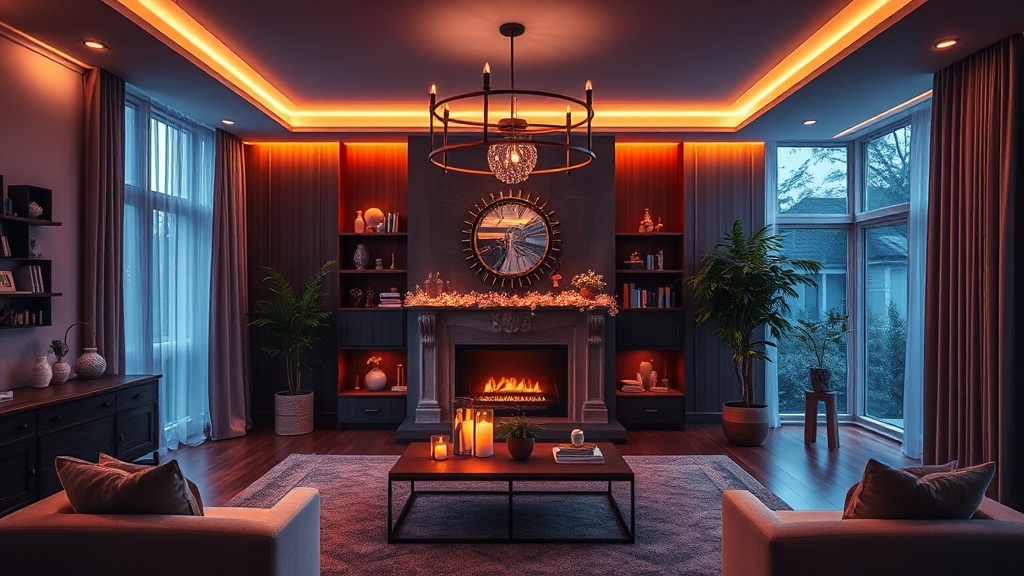
Transform Your Living Room with These Cozy Layered Lighting Ideas

Layered lighting transforms a living room from a flat, functional space into a room with depth, warmth, and intention. This guide breaks down the three core layers—ambient, task, and accent lighting—and shows exactly how to combine them for a cozy, professionally designed look. You'll learn specific fixture types, placement strategies, and real products that deliver results without overwhelming the space or the budget.
What Is Layered Lighting and Why Does It Matter?
Layered lighting is the practice of using multiple light sources at different levels and intensities to create a balanced, inviting room. Relying on a single overhead fixture flattens everything. Shadows disappear. Textures flatten. The room feels like a waiting area, not a living space.
The concept comes from theatre and gallery design—spaces where light is a tool, not just an afterthought. In a living room, the same principles apply. You need light for seeing (ambient), light for doing (task), and light for feeling (accent). Each layer serves a distinct purpose. Together, they create atmosphere.
Here's the thing: most living rooms are over-lit in the wrong places and under-lit where it counts. A bright ceiling fixture might illuminate the entire room, but it won't help you read a book, highlight a painting, or make anyone want to linger after dinner.
What's the Best Ambient Lighting for Living Rooms?
The best ambient lighting for living rooms comes from dimmable, diffused sources that cast a soft, even glow across the space—think ceiling-mounted fixtures with fabric shades, recessed lights with warm colour temperatures, or strategically placed floor lamps that bounce light off walls and ceilings.
Ambient light is your foundation. It should never be harsh or directional. The goal is to eliminate dark corners without creating glare.
Ceiling Fixtures That Actually Work
Flush mounts and semi-flush mounts have evolved beyond the sad, frosted-glass discs of the past. The Schoolhouse Electric Alabax fixture casts a warm, diffused light through its porcelain shade and pairs well with vintage-style LED bulbs. For larger rooms, a statement pendant like the Muuto Unfold—a rubberised pendant with a soft, folded silhouette—adds visual interest while distributing light evenly.
Recessed downlights (pot lights) work if used sparingly. The mistake most people make is installing them in a grid pattern across the entire ceiling. Instead, place them strategically—over seating areas, along room perimeters—and always choose dimmable, warm white LEDs (2700K–3000K). The Philips WarmGlow PAR38 bulbs dim smoothly to a candle-like warmth without the jarring blue tint of cheaper alternatives.
Cove and Indirect Lighting
For a truly improved look (that said, "improved" here refers to ceiling height, not marketing speak), consider indirect lighting. LED strips hidden in coves, behind crown moulding, or under sofa skirts create a floating, ambient glow without visible fixtures. The Philips Hue Lightstrip Plus integrates with smart home systems and offers tunable whites from energising daylight to evening amber.
"The best ambient light is the kind you don't notice until it's gone. If guests comment on your ceiling fixture, you've made it too prominent." — Interior Lighting: A Practical Guide, Illuminating Engineering Society
How Do You Add Task Lighting Without Ruining the Ambience?
Add task lighting through adjustable floor lamps, swing-arm wall sconces, and desk lamps positioned at seating height—aiming for 400–700 lumens at the work surface without casting light upward into people's eyes or creating harsh shadows on faces.
Task lighting is where most living rooms fail. You need to see to read, sew, work on a laptop, or play board games. But a bright task lamp can destroy the warm atmosphere you've carefully built with your ambient layer.
Reading and Seating Areas
A well-designed reading lamp directs light downward and slightly backward, illuminating pages without shining in your eyes or creating glare for others in the room. The Anglepoise Type 75—a British design classic updated with modern internals—offers precise positioning and takes a standard E27 bulb, so you're not locked into proprietary replacements.
For floor-standing options, the Flos Arco remains unbeatable (and expensive). The marble base provides stability; the arched arm extends light over seating without ceiling mounting. Budget alternatives like the CB2 Arc Floor Lamp deliver similar function at a fraction of the price—though the steel base lacks the satisfying heft of Carrara marble.
Work and Hobby Spaces
If your living room doubles as a workspace, task lighting becomes non-negotiable. The BenQ e-Reading LED Desk Lamp features an ambient light sensor that automatically adjusts output based on room conditions—a small detail that prevents eye strain during long evenings.
| Task Lighting Type | Best For | Recommended Lumens | Example Product |
|---|---|---|---|
| Adjustable Floor Lamp | Reading nooks, beside sofas | 450–800 lumens | Anglepoise Type 75 Floor |
| Swing-Arm Wall Sconce | Flanking fireplaces, beside beds | 400–600 lumens | Schoolhouse Ion Wall Sconce |
| Articulating Desk Lamp | Work corners, craft tables | 500–1000 lumens | BenQ e-Reading LED |
| Piano/Console Lamp | Sideboards, console tables | 300–500 lumens | House of Troy Grand Piano Lamp |
Worth noting: dimmers are as important for task lighting as they are for ambient. A lamp that works for detailed work at 6 PM should dial down for relaxed conversation at 9 PM.
What's the Secret to Mood-Lifting Accent Lighting?
The secret to mood-lifting accent lighting is placing small, focused light sources at varying heights to highlight textures, cast dramatic shadows, and draw attention to architectural details or art—using picture lights, uplights, and hidden LED strips rather than flooding everything with uniform brightness.
Accent lighting is where personality lives. It's the glow behind a bookcase. The pool of light on a sculpture. The subtle wash across a textured brick wall. Done well, it adds depth and drama. Done poorly, it looks like a theme restaurant.
Art and Object Lighting
Pictures and objects deserve their own light. The Cocoweb Tru-Slim LED Picture Light mounts above frames and casts an even, UV-free beam that won't damage artwork. For sculptures or ceramics on shelves, consider miniature LED spotlights like the WAC Lighting HR-LED87—a 2-inch adjustable fixture that disappears into displays.
The catch? Placement matters more than fixture cost. Art lights should sit 30–35 degrees off vertical to avoid glare and hot spots. Test positions with a flashlight before committing to mounts.
Architectural Accent Techniques
Uplighting transforms ordinary features into focal points. A simple LED uplight at the base of a fireplace column, a large plant, or a textured wall creates dramatic shadows and visual interest. The Philips Hue Lily Outdoor Spot Light (yes, outdoor—it's rated for moisture and looks better than most indoor options) offers adjustable colour temperature and works indoors near plants or water features.
Backlighting shelves and cabinets adds depth and makes collections glow. LED strips mounted behind TV screens reduce eye strain (bias lighting) and add a subtle, modern touch. The MediaLight Bias Lighting system is calibrated to reference standards used by video professionals—overkill for most, but perfect for cinephiles.
Candles and Fire
Never underestimate actual flame. Candles provide accent light that no LED can replicate—the flicker, the warmth, the imperfection. The Diptyque Baies candle burns evenly and fills a room with subtle blackcurrant scent. For flameless alternatives, the Luminara LED candles use electromagnetics to create a convincingly random flicker (no plastic-y on-off blinking).
How Do You Control All These Layers?
Control layered lighting through smart switches, dimmers, and scene presets that allow instant adjustment of multiple fixtures—grouping ambient, task, and accent lights into coordinated settings for different activities and times of day.
A living room with fifteen light sources is useless if you need three remotes and a PhD to turn them on. Integration is everything.
Smart Lighting Systems
The Lutron Caséta system offers reliable wireless dimmers that work with existing wiring and integrate with Alexa, Google Home, and Apple HomeKit. Unlike Wi-Fi bulbs, smart switches control the circuit—so wall switches still work when someone flips them manually (a surprisingly common occurrence).
For renters or those avoiding electrical work, the Philips Hue ecosystem provides plug-and-play control through a bridge and app. Create "scenes"—Bright for cleaning, Relaxed for conversation, Dim for movie night—and activate them with voice commands or automation.
Dimmer Guidelines
Not all LEDs dim well. Cheap bulbs flicker, buzz, or drop out entirely at low settings. Look for bulbs labelled "dimmable" and pair them with compatible dimmer switches. The U.S. Department of Energy maintains guidance on LED compatibility worth consulting before major purchases.
Here's a practical rule: install dimmers on every switch except those controlling task-specific outlets (like a desk area where someone might plug in a vacuum). The flexibility costs little and transforms how spaces feel throughout the day.
Putting It Together: A Sample Living Room
Imagine a typical 12-by-16-foot living room with a sofa, two reading chairs, a fireplace, and built-in bookcases.
Ambient layer: A semi-flush mount with a linen shade (dimmable) provides base illumination. LED cove lighting above the bookcases adds evening warmth. Total: 2 circuits.
Task layer: An adjustable floor lamp beside each reading chair. A desk lamp on the console where mail gets sorted. Total: 3 fixtures.
Accent layer: Picture lights above two framed prints. Uplights flanking the fireplace. LED strips behind the television. Candles on the mantel. Total: 5+ sources.
Controlled through a Lutron system with scenes: "Morning" (full ambient, no accent), "Reading" (dimmed ambient, task lamps on), "Evening" (cove and accent only, no overhead), "Movie" (bias lighting only).
The result? One room. Four distinct moods. No single fixture doing all the work. That's the power of layering—light becomes a material you shape, not just a utility you switch on.