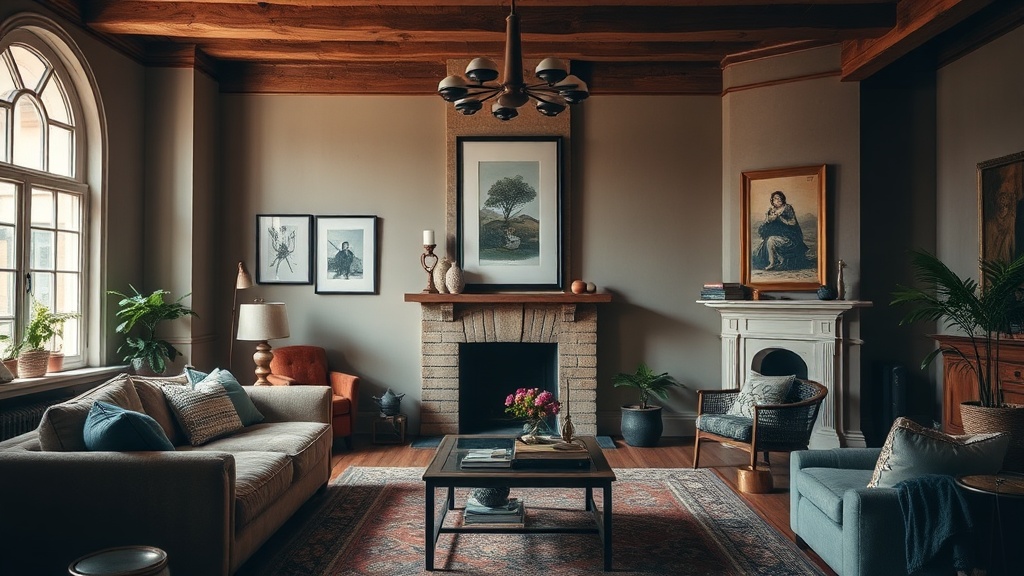
The Case for Characterful Imperfection in Your Living Space

The Myth of the Flawless Interior
Most people believe that a high-end home requires a certain sterile perfection—a state where every surface is untouched and every corner is mathematically precise. They chase the look of a showroom, thinking that a lack of visible wear equals quality. They are wrong. A space that is too polished often feels hollow, lacking the soul that makes a house feel lived-in. Real luxury isn't about the absence of flaws; it's about the presence of character. It is the distinction between a mass-produced, characterless room and a space that tells a story through its textures, its history, and even its minor imperfections.
When we design a room, we often focus on the 'new.' We look for the latest trend, the cleanest lines, and the most uniform surfaces. But a room filled only with new, perfect things feels static. It lacks movement. To create a room with depth, you must look toward the 'imperfect'—the hand-hewn wood, the slightly uneven ceramic, or the vintage textile that has softened over decades. These elements provide a visual rhythm that a catalog-perfect room simply cannot replicate.
Why Does My Living Room Feel Sterile?
If you walk into a room and feel an immediate urge to not touch anything, you haven't created a sanctuary; you've created a museum. This sense of sterility usually stems from an over-reliance on matching sets and uniform textures. When your sofa, your coffee table, and your side tables all share the same factory-perfect finish, the eye has nowhere to rest. There is no tension. In design, tension is a good thing. It is the friction between a smooth, polished marble tabletop and a rough, raw linen upholstery that creates visual interest.
To fix a sterile room, you need to introduce varied-age objects. Don't be afraid of a piece that shows its age. A weathered wooden stool or a brass bowl with a slight patina adds a sense of time to a room. Time is the one element we cannot manufacture, and incorporating it into your decor provides a sense of permanence. You can learn more about the history of material durability through resources like Architectural Digest, which often highlights how historical textures inform modern design.
Consider the weight of your objects. A room feels empty when everything has the same visual weight. A heavy, dark oak chest provides a grounding counterpoint to a light, airy linen curtain. If everything is light, the room floats away; if everything is heavy, it feels oppressive. The goal is a balanced discord.
How Do I Mix Vintage and Modern Furniture?
The biggest fear people have when moving away from the 'set' mentality is that their home will look like a thrift store accident. They worry that a modern, mid-century sofa won't sit well next to a rustic, antique side table. But the secret lies in the scale and the color palette. You don't need to match the era; you need to match the spirit.
A great way to approach this is by using a consistent color thread. If you have a very modern, minimalist sofa, you can ground it with a vintage rug that features a faded, organic pattern. The rug acts as a bridge between the new and the old. The key is to avoid 'themed' decorating. You aren't trying to build a mid-century modern showroom; you are building a life. A well-curated room should feel like a collection of things you love, not a collection of things that belong together in a showroom.
For those interested in the technicalities of furniture-making and how different eras define craftsmanship, the Victoria and Albert Museum offers incredible digital archives that show how styles evolved. Understanding this evolution helps you realize that a modern piece and an antique piece can coexist if they share a similar design philosophy, such as a focus on form or a specific material type.
Finding the Right Balance of Texture
Texture is the silent language of interior design. While color grabs the attention, texture holds the interest. A room with a single texture—say, all smooth surfaces—is boring. A room with too much texture becomes chaotic. The trick is to layer. Start with a foundational texture (your walls and large furniture) and then layer in the 'accent' textures through accessories.
- The Foundation: A smooth plaster wall or a large, flat-weave rug.
- The Layer: A velvet cushion or a textured wool throw.
- The Detail: A hand-thrown ceramic vase or a textured stone coaster.
This layering creates a tactile experience. When you touch a surface, it should tell you something about its origin. A smooth, cold stone surface feels different than a warm, textured wood. This contrast is what makes a room feel layered and intentional rather than flat and uninspired.
Is It Better to Buy Quality or Quantity?
In a world of fast furniture, the temptation to buy frequently is high. But a room filled with 'fast' items often feels disposable. It lacks the gravity of a well-designed space. When you are choosing pieces for your home, I suggest looking for items that possess a sense of 'heft'—both literally and figuratively. A piece of furniture that is built with joinery rather than just screws and glue will age with grace. It will develop a patina rather than just breaking down.
Think about the lifecycle of your objects. A beautiful, solid wood table might have a scratch in five years, but that scratch becomes part of its history. A cheap, laminate table will simply look broken. Choosing quality over quantity means you are investing in the longevity of your aesthetic. It is better to have one exceptional chair that you love than four mediocre ones that you eventually tire of. This approach also aligns with a more sustainable way of living, moving away from the cycle of constant replacement.
| Material Type | Ideal Use | Texture Profile |
|---|---|---|
| Natural Linen | Upholstery & Curtains | Soft, matte, organic |
| Solid Oak | Tables & Flooring | Hard, warm, textured grain |
| Brushed Brass | Hardware & Lighting | Metallic, subtle, aged |
| Hand-made Ceramic | Decor & Tableware | Tactile, irregular, earthy |
Ultimately, your home should be a reflection of your journey. It shouldn't be a perfect snapshot of a trend, but a living, breathing entity that grows with you. Embrace the slight lean in a hand-built shelf or the way sunlight hits a slightly uneven glass vase. Those are the moments where beauty actually resides.