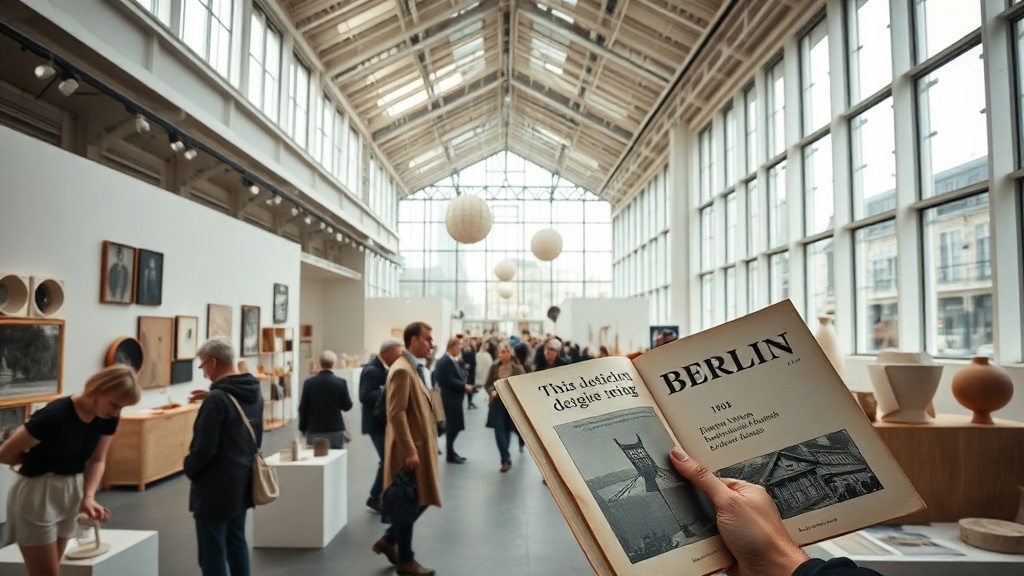
Sustainable Exhibition Curation: Lessons from Berlin Design Week

Why should designers care about sustainable exhibition curation?
Design isn’t just about aesthetics; it’s a disciplined intellectual pursuit that should leave a lighter footprint. Berlin Design Week 2026 proved that you can celebrate historic craft while championing eco‑friendly practices. In the first 100 words, I’ll show you how to bring that same intentionality to your own exhibition.
What are the core principles of sustainable exhibition design?
From my experience curating the Berlin Design Week pavilion, three pillars emerged:
- Material honesty: Choose reclaimed or locally sourced materials. Think of the Japanese joinery ethos—no nails, no glue, no excess.
- Energy efficiency: Light with LEDs, power only what you need, and harness natural light where possible.
- Storytelling that respects the artifact: Let the object speak; avoid over‑design that drowns its history. My recent piece on 1950s Swiss transit tickets illustrates this restraint.
How can I source eco‑friendly materials for displays?
Start with a material audit. Ask yourself: Does this material have a second life? Reclaimed wood, recycled metal, and biodegradable fabrics are excellent choices. The MuseumNext guide offers a vetted supplier list.
What steps should I follow to curate the exhibition?
- Define a clear narrative. Your exhibition needs a thesis—like the “ugly‑useful” mantra I champion. Draft a one‑sentence statement that anchors every object.
- Audit the collection. Catalog each piece, noting size, weight, material, and conservation needs. Use a spreadsheet to spot redundancies.
- Select a sustainable layout. Favor modular, reusable structures. The bread‑bag‑clip principle teaches us that small gestures—like a simple wooden riser—can solve big spatial challenges.
- Design lighting with intent. Position LEDs to highlight form without glare. Consider daylight harvesting—Berlin’s exhibition hall used skylights to cut electricity by 30%.
- Produce minimal graphics. Follow the Helvetica restraint: use clean type, limit colors, and print on recycled paper.
- Plan for post‑event reuse. Design mounts and panels that can be disassembled and repurposed for future shows.
How do I measure the sustainability impact?
Track three metrics:
- Carbon footprint: Use a calculator like the UN SDG tool to log material origins and energy use.
- Waste diversion rate: Aim for 90%+ of materials to be reused or recycled.
- Visitor perception: Survey attendees on whether the exhibition felt “responsibly crafted.”
What are the common pitfalls and how to avoid them?
Pitfall 1: Over‑decorating. Resist the urge to add unnecessary graphics. Let the objects breathe.
Pitfall 2: Ignoring local regulations. Some cities have strict fire‑safety rules for reclaimed wood. Check Berlin’s official guidelines before finalizing.
Pitfall 3: Underestimating transport impact. Choose local suppliers to cut emissions.
What’s the next step after the exhibition?
Document the process. Publish a case study on your site—this not only showcases your work but also contributes to the broader discourse on “ugly‑useful” design. Remember, design is a series of gestures; each exhibition is a chance to make a lasting, responsible one.
Takeaway
Curating a sustainable design exhibition isn’t a lofty ideal; it’s a series of concrete choices—from material honesty to modular layouts. Apply the steps above, and your next show will stand as a testament to substance over spectacle.
Related Reading
- The 100‑Year‑Old Kitchen That Makes Smart Homes Look Stupid — How historic kitchens teach us about durability.
- Less But Better: The Moral Weight of Restraint — A deeper dive into restraint, the backbone of sustainable curation.
FAQs
- What are the key principles of sustainable exhibition design? Material honesty, energy efficiency, and restrained storytelling.
- How can I source eco‑friendly materials for displays? Use reclaimed wood, recycled metal, biodegradable fabrics, and consult vetted supplier lists like the MuseumNext guide.
- Where can I find inspiration for curating design exhibitions? Attend events like Berlin Design Week, study historic exhibitions, and read case studies such as the 100‑Year‑Old Kitchen article.