Small Space, Big Style: Studio Apartment Ideas That Actually Work

How Can One Room Feel Like Three?
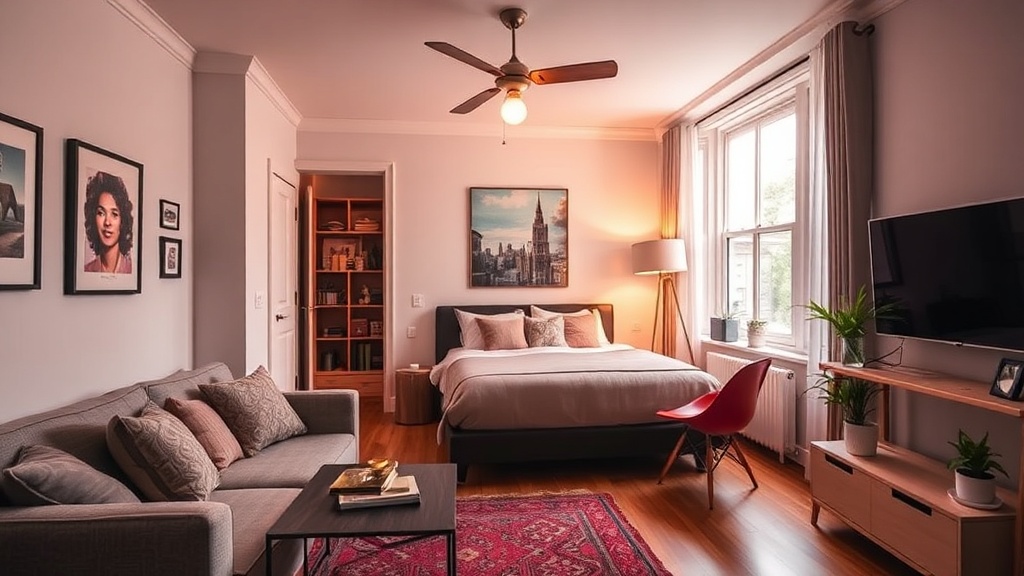
The answer lies in strategic zoning — not walls, but intention. A studio apartment doesn't have to feel like a dorm room with a hot plate. With the right moves, 400 square feet can host dinner parties, productive work sessions, and restorative sleep — all without the chaos of everything bleeding together. This post breaks down studio design strategies that don't require a contractor or a trust fund. You'll find furniture picks that earn their keep, layout tricks from actual architects, and the real reason some tiny apartments feel like sanctuaries while others feel like storage units.
What's the Best Way to Create Zones in a Studio Apartment?
The best way is through furniture placement, lighting variation, and subtle visual cues rather than permanent construction. Think of the space as a gallery — each "room" gets its own moment without hard barriers that shrink the footprint.
Start with the largest piece. A sofa placed perpendicular to the wall (rather than pushed against it) instantly creates two distinct areas — living and sleeping — without building anything. The back of that sofa becomes a natural boundary. Add a console table behind it, and suddenly there's a visual anchor that says "this side is for Netflix, that side is for rest."
Rugs work harder in studios than anywhere else. A large area rug under the "living room" section — one that fits all furniture legs — claims territory without a wall. Switch to a different texture or pattern in the sleeping zone. The shift signals to the brain that the space has changed purpose. Here's the thing: the rugs don't need to match. In fact, they shouldn't. Cohesion is overrated when you're trying to carve out separate moods.
Lighting layers do what walls cannot. A pendant over the dining area, a floor lamp anchoring the reading nook, and wall sconces near the bed — each zone gets its own glow. When the pendant is off and the bedside sconce is on, the apartment shrinks to a bedroom. Reverse it, and you've got a living room. Light is the most flexible divider you'll find.
The IKEA Kallax shelving unit — yes, the one everyone owns — works because it's open on both sides. It stores books facing the living area and linens facing the bed. Nothing blocks sightlines, but the psychological separation is real. For something less collegiate, the CB2 Helix Bookcase does the same job with brass accents and walnut veneer.
Which Furniture Pieces Actually Work in Small Studios?
Multi-functional pieces with small footprints and clean sightlines — items that do double duty without looking like they came from a camping store. The goal is furniture that disappears visually even when it's right in front of you.
Here's the catch: not everything needs to transform. A Murphy bed sounds romantic until you're folding it up every morning. Sometimes a daybed works better — something that looks intentional as seating during the day and handles guests at night. The West Elm Mid-Century Daybed doesn't scream "I live in one room." It just looks like good furniture.
Nesting tables beat coffee tables. Always. Pull them out when friends visit; stack them when you need floor space for yoga. The Hay Tray Table — available at MoMA Design Store — stacks three high and weighs next to nothing. The powder-coated steel cleans easily, which matters when your coffee table is also your dining table.
Storage beds aren't sexy, but neither is clutter. The Thuma Bed Frame includes hidden drawers that actually glide — no wrestling with stuck tracks at midnight. It costs more than a basic frame, but it eliminates the need for a dresser. That's square footage reclaimed.
| Furniture Type | Budget Pick | Investment Pick | Why It Works |
|---|---|---|---|
| Sofa | Floyd The Sofa ($1,200) | Design Within Reach Raleigh Sofa ($3,400) | Raised legs = visual air; tight upholstery = less bulk |
| Dining/Work Surface | CB2 Freddy Desk ($499) | Arhaus Aiden Desk ($1,799) | Narrow depth (20") fits against walls; doubles as console |
| Storage | IKEA IVAR Shelving ($150) | USM Haller System ($2,800+) | Vertical storage keeps floor clear; modular for moves |
| Bed | Zinus Suzanne Metal Frame ($300) | Thuma The Bed ($1,500) | No headboard bulk; under-bed clearance for storage |
| Seating | HAY Palissade Chair ($295) | Carl Hansen & Søn CH24 ($650) | Stackable or compact; indoor/outdoor flexibility |
Worth noting: acrylic and glass pieces are secret weapons. A ghost chair doesn't block light. A glass dining table doesn't dominate visually. The Kartell Victoria Ghost Chair — Philippe Starck's transparent classic — adds seating without adding weight to the room.
How Do You Make a Studio Feel Bigger Than It Is?
Mirrors, consistent flooring, and a restrained color palette expand perception more than square footage ever could. The eye travels smoothly, and the brain fills in the gaps with imagined space.
A large mirror — truly large, not decorative vanity sizing — positioned opposite a window becomes a second window. It doubles the light and fakes a view. The CB2 Infinity Round Mirror at 48 inches across does this without a heavy frame that would break the illusion. Lean it rather than hang it for casual elegance that feels rented (in a good way).
Paint everything the same color — walls, trim, ceiling, doors. One continuous envelope erases the edges that chop up small spaces. Benjamin Moore's Simply White or Farrow & Ball's School House White work because they're warm without being yellow. The catch? Dark colors can work too — but only if you commit. A deep charcoal studio with high-gloss trim and brass hardware feels like a jewel box rather than a cave. The key is consistency. Half-measures read as mistakes.
Curtains hung high and wide — rod placed just below crown molding, panels extending a foot past the window frame — create the suggestion of larger windows. Even if the actual glass is 24 inches wide, the fabric frames it like something grander. IKEA's MAJGULL blackout panels cost $60 and look like they cost more when hung properly.
Vertical lines draw the eye up. Floor-to-ceiling bookshelves, tall plants (a fiddle leaf fig in the corner, a snake plant by the door), pendant lights that hang low — they all emphasize height over width. The room feels loftier. That said, keep the tops of those bookshelves slightly messy. Perfect styling reads as try-hard. A stack of magazines, a ceramic vase slightly off-center — that's the move.
The 10-Minute Fix That Changes Everything
Clear every horizontal surface. Not "rearrange" — remove. The kitchen counter, the bedside table, the desk, the bathroom vanity. Everything goes into a box. Then put back only what you use daily or what brings genuine pleasure. Everything else finds a drawer or leaves the apartment. This isn't minimalism as aesthetic; it's minimalism as breathing room. A studio with empty surfaces feels twice the size of the same studio cluttered with "styled" objects.
Storage Without the Storage Look
Under-bed boxes from The Container Store's Elfa collection roll out on wheels. Vacuum bags shrink off-season clothes. A pegboard from Wall Control mounted in the kitchen holds tools, not art — but painted the same color as the wall, it disappears. The best storage doesn't look like storage. It looks like walls, like furniture, like nothing at all.
That said, some things deserve display. A ceramic collection. Vintage cameras. These aren't clutter — they're personality. The difference lies in intention. Group like with like. Give them breathing room. A single shelf with five carefully chosen objects beats a crowded mantel every time.
When to Break the Rules
If something makes you happy — a massive painting, a collection of vintage mirrors, a chair that's comfortable but ugly — keep it. Design rules are training wheels. At a certain point, you ride without them. The most interesting studios look like someone lives there, not like someone staged them. A crumpled throw. A coffee mug ring on the table. These are signs of life, not failure.
The best studio apartment doesn't maximize every inch. It maximizes the right inches — the ones where you actually live. Everything else is just square footage on a lease.