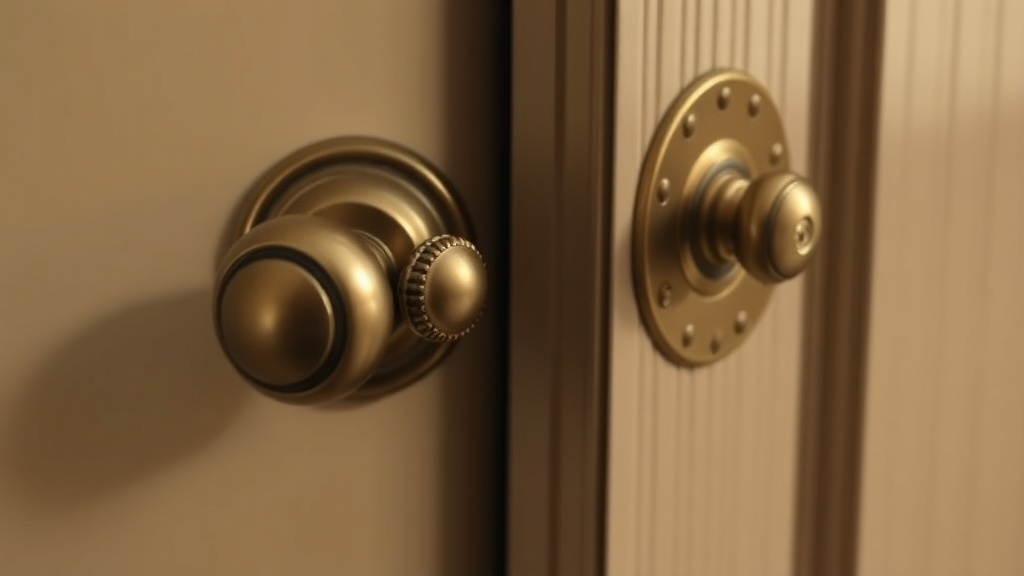
Selecting Hardware That Defines a Room's Character

Why does a certain room feel finished, while another feels like a collection of disconnected parts? Often, the difference lies in the smallest details—the metal bits you touch every day. Hardware is the jewelry of the home, a tactile connection between the architecture and the inhabitant. When you choose a handle or a knob, you aren't just picking a functional tool; you are setting the tone for the entire room's visual weight and material honesty.
Most people treat hardware as an afterthought, a final checkbox before a project is complete. That is a mistake. If you have spent months selecting the perfect linen drapery or a hand-finished oak table, the last thing you want is a generic, mass-produced pull that lacks soul. Good hardware should feel intentional. It should have a weight to it—both literally and figuratively.
How do I choose hardware that matches my furniture?
The most common mistake is trying to make everything match perfectly. If your kitchen cabinets are a mid-century modern style, you don't necessarily need a mid-century knob. Instead, look for a shared design language. If your furniture has clean, straight lines, a piece of hardware with a subtle, geometric profile will feel right. If your pieces are more organic or traditional, look for hand-forged textures or slightly irregular shapes.
Think about the era of your home. If you live in a Victorian-era building, a highly polished, modern chrome handle will look like a mistake (a jarring, anachronistic one at that). A weathered brass or a darkened bronze feels much more appropriate. You want to respect the history of the space while injecting your own sensibility. Consider the following pairings:
- Traditional/Classic: Unlacquered brass, heavy porcelain knobs, or hand-hammered iron.
- Modern/Minimalist: Matte black slim pulls, brushed nickel, or even integrated finger pulls that hide the hardware entirely.
- Rustic/Organic: Hand-forged steel, darkened bronze, or even leather pulls for a softer, tactile experience.
A great resource for understanding historical metal finishes and their evolution is the Architectural Digest archives, which often showcase how different eras used metalwork to define luxury.
Does the finish of my hardware matter for durability?
It matters immensely, especially in high-use areas like kitchens and bathrooms. A finish isn't just a color; it is a layer of protection. For example, unlacquered brass is a favorite among designers because it develops a patina over time. It reacts to the oils in your skin and the environment, becoming more beautiful as it ages. However, if you want a look that stays exactly as it is today, you should opt for a lacquered or PVD (Physical Vapor Deposition) finish.
In a bathroom, moisture is your biggest enemy. A cheap plated finish might start to flake or pit after a year of steam and humidity. This is why I always suggest looking at the quality of the base metal. Solid brass is the gold standard—it is heavy, it lasts, and it feels substantial in the hand. If you are on a budget, look for high-quality stainless steel, which offers a clean, industrial durability without the high price tag of solid brass.
Will different hardware styles clash in the same room?
The short answer is yes, if you aren't careful. A room becomes visually cluttered when there are too many competing textures. If you have a kitchen with marble countertops and a heavy wooden island, you might want to use different hardware for the upper and lower cabinets to create a sense of hierarchy. Use a simpler, smaller knob for the upper cabinets to keep the visual weight light, and a longer, more substantial pull for the lower cabinets to anchor the design.
The goal is a sense of cohesion, not total uniformity. A slight variation in scale or texture creates depth. It’s the difference between a room that looks like a catalog page and a room that looks like it was curated over time. If you're looking for inspiration on how different materials interact in high-end spaces, checking out the collections at Kelly Wearler can provide insight into how scale and texture work together to create a mood.
When you are selecting your pieces, don't just look at them from a distance. Go to a showroom. Touch them. Feel the weight. A handle that feels light and hollow in your hand will never feel like a premium part of your home. It will always feel like a temporary fix. A well-chosen piece of hardware is a small, daily luxury—a reminder that even the most functional objects can be beautiful.
One final tip: pay attention to the scale. A tiny knob on a massive, heavy drawer looks disproportionate and cheap. A massive, chunky pull on a small jewelry box looks clumsy. The hardware should feel like it belongs to the object it is attached to, supporting its weight and its purpose without overwhelming it or being lost in the process.