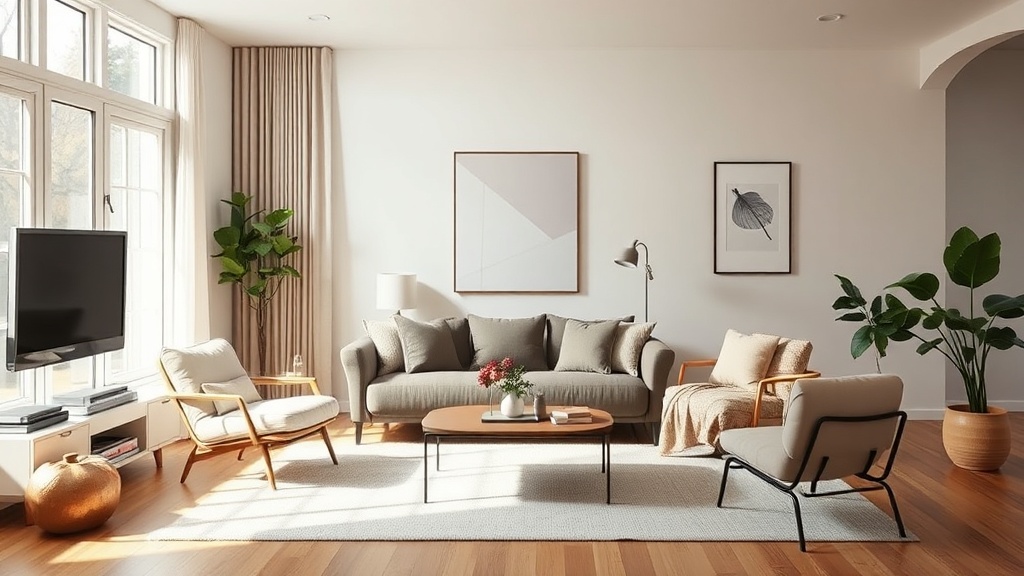
How to Create a Cozy Minimalist Living Room That Feels Like Home

This guide breaks down the art of building a minimalist living room that doesn't feel sterile or cold — one that welcomes, shelters, and actually feels lived-in. You'll learn how to balance negative space with warmth, choose materials that age beautifully, and avoid the common pitfalls that turn minimalist spaces into showroom floors. Whether you're downsizing, decluttering, or simply craving calm after chaotic days, these principles will help you create a room that breathes.
What Makes a Minimalist Living Room Feel Cozy Instead of Cold?
The short answer: texture and intention. A room stripped of clutter but layered with tactile materials — wool, linen, raw wood, aged brass — feels inviting rather than austere. The mistake most people make is confusing minimalism with emptiness. They're not the same thing.
Consider the Arket Home philosophy: every object earns its place through function or emotional resonance. A single well-chosen ceramic vase on a oak credenza carries more weight than a shelf crowded with trendy trinkets. The negative space around that vase becomes part of the composition — breathing room for the eye and the mind.
Warmth in minimalism comes from material honesty. A concrete floor left bare feels institutional; the same floor softened with a hand-knotted Nanimarquina wool rug becomes grounding. Natural materials age — they scratch, patina, soften — and that living quality prevents a sparse room from feeling like a photograph.
Lighting matters enormously. Overhead fixtures alone create harsh shadows and that dreaded dentist-office ambience. Layer instead: a floor lamp with a linen shade (the Flos Arco comes to mind), table lamps at varying heights, and candles for evening. Dimmable bulbs in warm tones (2700K, never cooler) transform a room after sunset.
How Do You Choose Furniture That Fits Minimalist Principles?
Select pieces with clean lines but generous proportions — furniture that invites use, not just admiration. The best minimalist sofas (think Blu Dot's Mono or Muji's modular units) share a common DNA: visible wood or metal frames, upholstery in oatmeal or charcoal, and cushions you actually sink into.
The "one in, one out" rule sounds strict, but here's the thing — it prevents the slow creep of visual noise. Before buying anything, ask: does this solve a problem? Does it replace something broken or worn? Does it spark genuine pleasure when looked at or used? Three yes answers and it belongs. Two or fewer — wait.
A comparison of three foundational pieces worth the investment:
| Piece | Budget Option | Investment Option | Why It Matters |
|---|---|---|---|
| Sofa | IKEA Söderhamn ($899) | Carl Hansen & Søn E220 ($8,500) | The sofa anchors the room. Cheap foam collapses; good springs and down hold shape for decades. |
| Coffee Table | Article Mara ($449) | De La Espada Neri & Hu ($3,200) | Solid wood develops character. Veneer chips and peels. |
| Storage | CB2 Drommen ($599) | USM Haller ($2,800+) | Visible storage must be beautiful. Modular systems adapt as needs change. |
Notice the pattern — investment in seating and surfaces, flexibility in storage. That's not accidental. You touch the sofa daily. The coffee table holds your coffee, your books, your feet. These deserve permanence. Storage systems should evolve.
What Colors Work Best for Warm Minimalism?
Stick to a restrained palette derived from nature: warm whites, soft greys, camel, oatmeal, terracotta, and deep charcoal. These hues shift beautifully throughout the day as light changes, preventing that flat, washed-out look that plagues all-white minimalist rooms.
The catch? Undertones matter enormously. A white with blue undertones feels crisp and clinical — fine for a gallery, wrong for a living room. Look instead for whites with yellow, pink, or green bases. Farrow & Ball's "Pointing" or "School House White" carry warmth without veering into cream. For bolder moments, consider "Red Earth" or "India Yellow" — used sparingly, on a single wall or inside a bookshelf.
Neutrals don't mean boring. The interplay of warm white walls against raw oak flooring, a charcoal linen sofa, and brass lighting creates visual interest through material contrast rather than color chaos. It's quieter — but no less sophisticated.
Here's a practical approach: choose three colors maximum. One dominant (usually walls), one secondary (larger furniture), one accent (textiles, ceramics, books). That constraint forces creativity. You'll notice texture more. You'll appreciate the grain in wood, the slub in linen, the hand of blown glass.
The Role of Negative Space
Walls don't need to be covered. Corners don't need to be filled. The Japanese concept of ma — the meaningful void between objects — applies directly here. That empty wall behind the sofa? It's rest. The clear surface of a side table? It's possibility.
That said, negative space requires maintenance. Empty shelves collect dust and eventually, clutter. The discipline of minimalism is ongoing — a weekly reset, a monthly audit of surfaces, a seasonal reassessment of what remains necessary. Think of it as editing rather than decorating.
How Can You Add Personality Without Adding Clutter?
Display fewer things, but display them with intention. One large painting carries more impact than a gallery wall of small frames. A single stack of carefully chosen books on the coffee table beats scattered magazines. A well-loved ceramic collection grouped on one shelf reads as curation; spread throughout the room, it becomes mess.
Personal items — photographs, travel souvenirs, inherited objects — deserve prominence, not hiding. The key is containment. Designate one surface, one shelf, one wall for personal expression. When that space fills, something must leave before something new arrives. This isn't harsh — it's respectful. Objects crammed together lose their individual stories.
Plants bridge the gap between minimalist discipline and organic warmth. A single large specimen (Fiddle Leaf Fig, Bird of Paradise, or Olive Tree) has architectural presence. Multiple small plants scattered everywhere feel like clutter. Choose one statement plant in a simple terracotta or unglazed ceramic pot. Let it be the punctuation mark in your room.
Textiles as Soft Architecture
Throw blankets and cushions often get dismissed as accessories. In a minimalist space, they're vital infrastructure. A heavy linen throw draped over a sofa arm adds color, texture, and invitation. Cushions in varying sizes and complementary textures — one velvet, one woven, one worn leather — create depth without pattern overload.
Curtains deserve serious attention. Floor-to-ceiling linen or cotton in a tone slightly darker than walls frames windows beautifully. Avoid blinds alone — they read as office-like. The soft fold of fabric, the way light filters through, the movement when a window opens — these humanize a room.
What Common Mistakes Ruin Minimalist Living Rooms?
The biggest error: buying "minimalist" furniture that's actually just cheap. Particleboard dressed in white laminate isn't minimalism — it's temporary. Save longer. Buy once. A single solid wood piece outlasts and outshines three replacements.
Another trap: copying Instagram aesthetics without considering lifestyle. That pristine white sofa looks stunning until you own a dog, a toddler, or a fondness for red wine. Choose materials that forgive — dark linen hides lint, leather develops character with scratches, wool resists stains naturally.
Worth noting: minimalism isn't monochrome. A room of beige-on-beige-on-cream reads as design paralysis, not restraint. Contrast matters. A black floor lamp against a white wall. Deep charcoal cushions on a pale sofa. The visual tension between light and dark gives a room energy.
Maintenance as Design Practice
Minimalist spaces require active maintenance — not more than cluttered spaces, just differently. The daily reset: cushions fluffed, throws folded, surfaces cleared. The weekly edit: magazines recycled, objects returned to their designated homes. The seasonal review: what hasn't been used, touched, or noticed in three months?
This practice becomes meditative. The room stays ready for living — for spontaneous guests, for quiet Sunday mornings, for the moment inspiration strikes. There's no frantic tidying because there's no excess to hide.
The well-designed minimalist living room doesn't impress visitors with its expense or trendiness. It shelters its inhabitants. It provides space for thought, for rest, for conversation. Every object earns its keep. Every empty corner offers possibility. And when evening comes, and the lamps dim, and the shadows lengthen across those carefully chosen surfaces — that's when you know the balance worked.