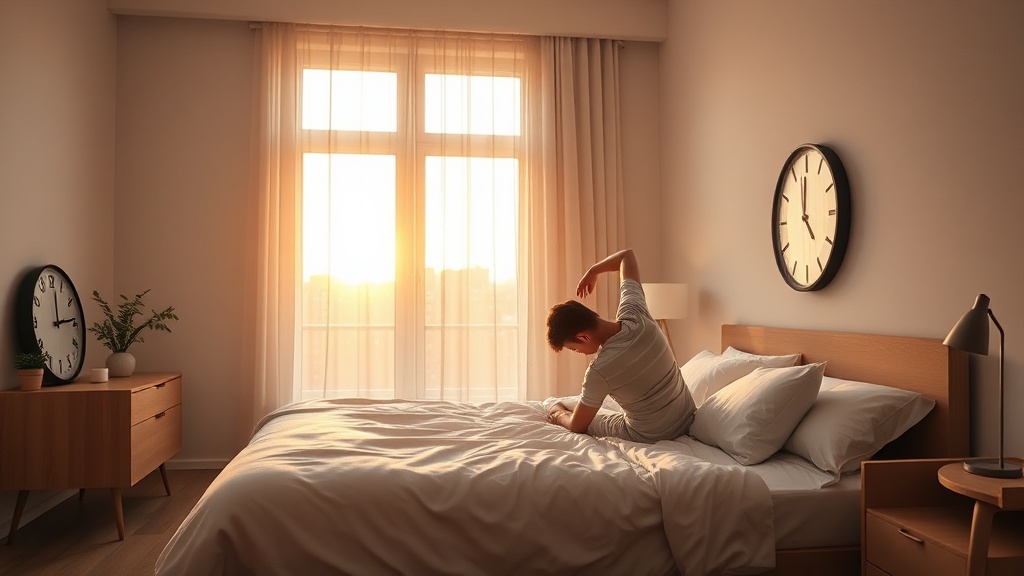
**Did you know that the 2026 daylight saving shift could shave an hour of sleep from your night?**
When the clocks spring forward this March, many of us feel the drag of grogginess, irritability, and a dip in productivity. It’s not just a nuisance—disrupting your circadian rhythm can affect mood, metabolism, and even immune function. The good news? You can outsmart the time change with a handful of evidence‑based tweaks.
---
### Why the Clock Change Matters
Daylight saving time (DST) isn’t just about more evening sunlight; it forces our internal clocks to reset overnight. Research from the [National Sleep Foundation](https://www.sleepfoundation.org/seasonal-sleep/daylight-saving-time) shows a **30‑40% increase in sleep‑related accidents** in the week after the shift. The body’s master pacemaker, the suprachiasmatic nucleus, relies on light cues to keep hormones, body temperature, and alertness in sync. When that cue jumps forward, you experience a temporary misalignment—what scientists call “social jetlag.”
Below, I walk you through practical, science‑backed steps to smooth the transition, boost your mood, and keep your productivity humming.
---
## How Can I Prepare Tonight Before the Clock Changes?
**1. Shift Your Schedule Gradually**
Start moving your bedtime and wake‑time earlier by **15 minutes each night** for three to four days before the shift. A study in *Sleep Medicine* (2023) found that incremental adjustments reduce sleep latency and improve morning alertness by up to **22%**.
**2. Dim the Lights Early**
Our eyes interpret light as the primary time‑keeper. Dim ambient lighting an hour before your intended bedtime to signal melatonin production. Consider using **warm‑tone bulbs** or a **blue‑light filter** on screens.
**3. Plan a “Power‑Down” Routine**
A consistent wind‑down ritual—reading a physical book, gentle stretching, or a short meditation—helps cue your brain that sleep is coming. I personally unwind with a **five‑minute breath‑focus** while listening to the ticking of an analog clock; the rhythm reinforces the idea of time slowing down.
---
## What Should I Do the Morning After the Shift?
**1. Get Morning Sunlight**
Expose yourself to natural light within the first **30 minutes** of waking. Light exposure suppresses melatonin and resets the circadian clock faster. A quick balcony stroll or a coffee by a sunny window can make a huge difference.
**2. Keep Caffeine Strategic**
Limit caffeine to the **first half of the day**. A 2022 meta‑analysis in *Chronobiology International* shows that late‑day caffeine delays the body’s internal clock, worsening the DST impact.
**3. Stay Hydrated and Move**
Dehydration can amplify fatigue. Drink a glass of water upon waking, and incorporate a **5‑minute stretch** or brisk walk to boost circulation and alertness.
---
## How Can I Maintain Energy Throughout the Day?
**1. Power Naps, Not Sleep‑In**
If you’re feeling drowsy, a **10‑20 minute nap** in the early afternoon can restore alertness without disrupting nighttime sleep. Avoid naps longer than 30 minutes; they can trigger sleep inertia.
**2. Eat Light, Balanced Meals**
Heavy meals spike blood sugar and then crash, magnifying fatigue. Opt for **protein‑rich breakfasts** (e.g., Greek yogurt with nuts) and **complex carbs** for sustained energy.
**3. Use the “Two‑Hour Rule” for Tasks**
Chunk work into **90‑120 minute blocks** followed by a short break. This aligns with the ultradian rhythm, a natural 90‑minute cycle of high and low alertness, helping you stay productive even when your clock feels off.
---
## Should I Adjust My Home Environment?
**1. Light‑Blocking Curtains**
If sunrise arrives earlier, use **blackout curtains** in the bedroom to keep the room dark until your desired wake‑time. This mimics the pre‑DST darkness your body expects.
**2. Temperature Tweaks**
A slightly **cooler bedroom (around 65°F / 18°C)** promotes deeper sleep. Consider a programmable thermostat to maintain that temperature throughout the night.
**3. Keep the Bedroom Clutter‑Free**
A tidy space reduces mental clutter, making it easier to unwind. I’ve found that a minimalist bedroom—think clean lines, a single piece of art—creates a visual cue for relaxation.
---
## How Does This Relate to Overall Well‑Being?
When you align your sleep schedule with the natural light cycle, you support **hormonal balance**, **cognitive performance**, and **mood stability**. In fact, the *Harvard Health Publishing* blog reports that proper circadian alignment can improve **depression scores by 15%** during seasonal transitions.
If you’re looking for a broader wellness boost, check out my recent piece on **[Spring Refresh 2026: 6 Science‑Backed Habits to Boost Energy and Well‑Being](/posts/spring-refresh-2026-6-science-backed-habits-to-boost-energy-and-well-being)**. It pairs nicely with these DST strategies.
---
## Quick Recap
- **Pre‑shift:** Gradually shift bedtime, dim lights, establish a wind‑down routine.
- **Morning after:** Seek sunlight, limit caffeine, hydrate, stretch.
- **All day:** Power nap wisely, eat balanced meals, use 90‑minute work blocks.
- **Environment:** Use blackout curtains, keep bedroom cool, maintain minimal clutter.
Implement these steps, and you’ll glide through the spring forward with **steady mood, sharper focus, and refreshed energy**—no more dragging yourself out of bed.
---
### Related Reading
- **[How to Create a Focused Home Office That Defies 2026 Trends](/posts/how-to-create-a-focused-home-office-that-defies-2026-trends)** – Design a workspace that supports the productivity habits outlined here.
- **[Creative Ways to Celebrate St. Patrick’s Day: Beyond the Green Parade](/posts/creative-ways-to-celebrate-st-patricks-day-beyond-the-green-parade)** – Celebrate the season with intentional, mood‑lifting activities.
---
**FAQ**
**What is the best time to start adjusting my sleep schedule before DST?**
> Begin the gradual 15‑minute shifts **three to four days** before the clock change. This gives your body enough time to adapt without drastic sleep loss.
**Can I use a sleep‑tracking app to monitor my adjustment?**
> Absolutely. Apps that track **sleep stages** and **morning light exposure** can provide data‑driven insights, helping you fine‑tune your routine.
**Is it okay to take melatonin to help reset my clock?**
> Short‑term melatonin (0.5‑3 mg) taken **30 minutes before bedtime** can aid the transition, but consult a healthcare professional if you have underlying conditions.