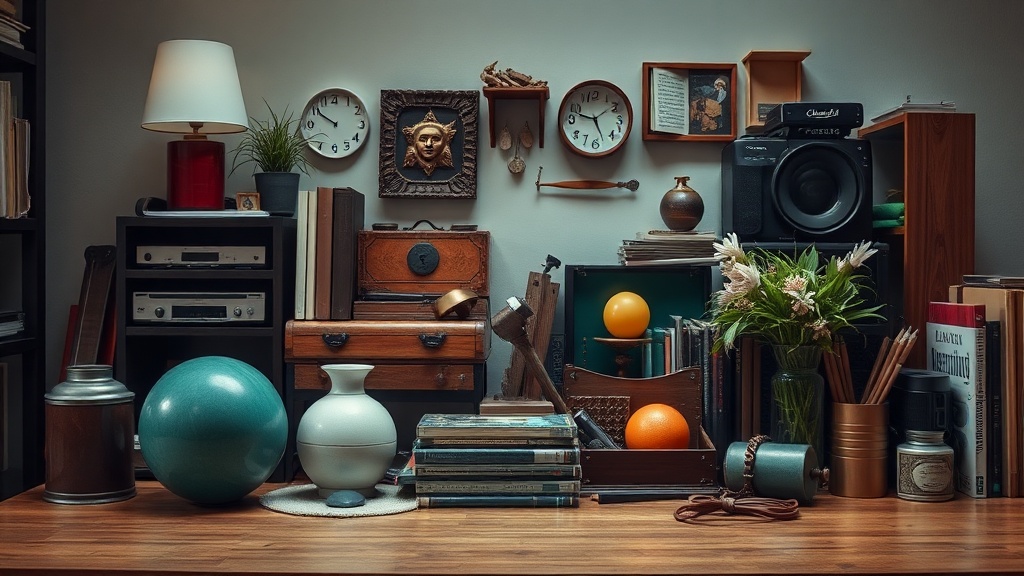
Beyond Clutter: Composing Meaningful Object Arrangements

Beyond Clutter: Composing Meaningful Object Arrangements
Have you ever walked into a room where every object feels perfectly placed, telling a silent story, yet appears entirely effortless? It’s not magic; it’s the thoughtful art of composing visual narratives. We’re not simply talking about tidying up a shelf or filling a cabinet. This is about imbuing inanimate objects with presence, allowing them to communicate a sense of history, a personal passion, or a quiet elegance. Understanding how to arrange pieces—whether they are inherited treasures, cherished books, or collected curiosities—can transform a space from merely decorated into profoundly resonant. It’s an approach that prioritizes intention and meaning over transient trends, cultivating an environment that feels both curated and genuinely lived in.
What makes a collection truly speak to us?
The allure of a well-arranged collection lies not just in its aesthetic appeal, but in its ability to evoke connection. What draws us to certain pieces, compelling us to display them? Often, it’s not their monetary value or fleeting fashionable status, but their inherent narrative. Consider the worn binding of a beloved first edition, the unique patina on a piece of antique stoneware, or the precise, almost mathematical lines of a mid-century ceramic. These objects carry a history, a craftsmanship that speaks volumes. When we choose what to display, we’re not merely selecting items; we’re selecting storytellers. Look beyond superficial beauty to the qualities that hint at provenance—the maker’s mark, the slight imperfection that signifies a handmade origin, the subtle wear that suggests a life lived.
Authenticity forms the bedrock of any compelling collection. A genuine connection to an object—a memory it holds, a place it represents, a craft it embodies—is what differentiates a true display from a random assortment. Think about the quiet power of a single, well-chosen piece of pottery that reflects a specific regional tradition, rather than a mass-produced item that merely mimics a style. This focus on the genuine allows for a display that resonates on a deeper level, offering more than just visual stimulation. It invites contemplation and discovery, a testament to the enduring beauty found in things made with care and intention. As you gather pieces, ask yourself: what story does this object tell? What part of my own narrative does it reflect? This discernment shifts the act of collecting from accumulation to curation, ensuring each piece earns its place within your visual dialogue.
How can balance and rhythm transform a display?
Once you’ve selected objects brimming with character, the next challenge is to arrange them in a way that respects their individual stories while creating a cohesive visual whole. This is where the principles of balance, rhythm, and visual weight come into play—concepts borrowed from classical art and design, yet entirely applicable to a modern interior. Begin by considering groupings. Displaying objects in odd numbers—threes, fives, or sevens—often feels more organic and dynamic than even pairings. This isn’t a rigid rule, but a guideline that tends to create visual interest, avoiding the static symmetry that can sometimes feel too formal or predictable.
Varying heights, textures, and forms within these groupings is equally important. Imagine a shelf adorned with three objects: a tall, slender vase; a medium-sized, irregularly shaped ceramic bowl; and a small, flat antique book. This arrangement offers visual diversity, encouraging the eye to move across the composition rather than resting on a single point. Consider the negative space around objects as carefully as the objects themselves; it’s the quiet pauses in the rhythm, allowing each piece room to breathe and assert its presence.