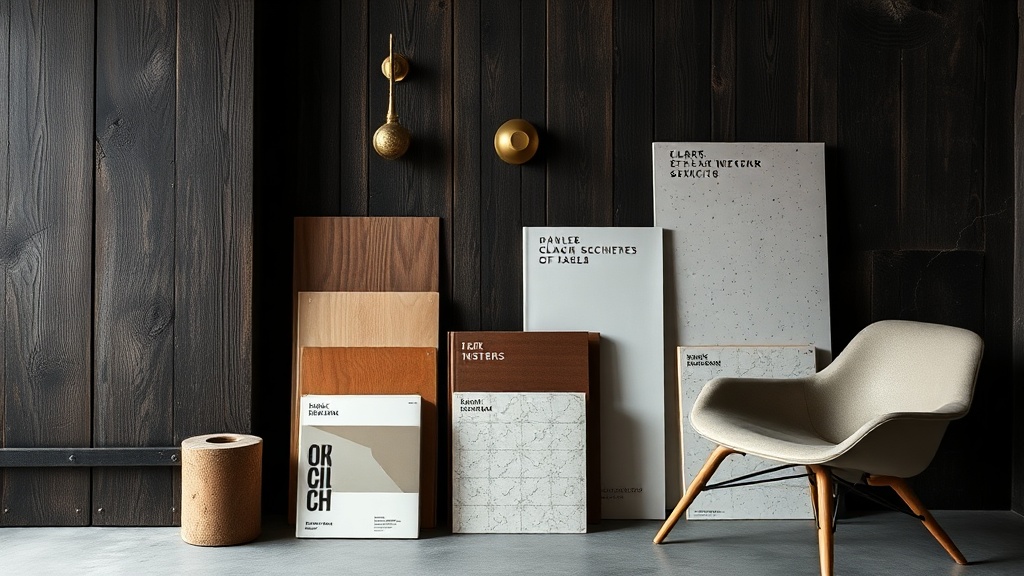
5 Underrated Materials That Will Redefine Interior Design in 2026

Terrazzo
Reclaimed Wood
Raw Concrete
Hemp Fabric
Hand‑Molded Clay Tiles
Hook
Ever walked into a showroom and felt the buzz of the latest "must‑have" finishes, only to realize they’ll be passé by next season? What if the real design revolution isn’t shouting from the rooftops but whispering from the corners of forgotten workshops? In 2026, five underrated materials are doing exactly that—quietly reshaping interiors without the hype.
Context
The design world is saturated with Instagram‑ready trends: pastel marble, matte black hardware, and endless modular furniture. While those look great in a feed, they often lack durability, cultural depth, or a genuine sense of place. Julian’s “ugly‑useful” ethos champions substance over spectacle, and these materials embody that philosophy. Below, I break down why each deserves a spot in your next project, how to source them responsibly, and where they’ve already proven their worth.
Why Is Terrazzo Making a Quiet Comeback?
Terrazzo isn’t a fleeting fad; it’s a 500‑year‑old floor system that survived wars, economic crashes, and the rise of synthetic laminates. Its durability, low maintenance, and endless palette of aggregates make it a sustainable alternative to imported marble.
- Historical credibility – From Roman villas to mid‑century corporate lobbies, terrazzo has always signaled institutional confidence. (See our deep dive on Terrazzo Is Not a Trend.)
- Material flexibility – You can embed reclaimed glass, sea‑shells, or even brass dust, creating a bespoke surface that reflects your client’s story.
- Environmental edge – Modern mixes use up to 30 % recycled content, slashing embodied carbon compared to virgin stone.
How to integrate: Start with a polished finish for high‑traffic areas, or a matte seal for a softer, tactile experience in residential spaces. Pair with brass fixtures for a brutalist‑meets‑craft aesthetic.
What Makes Reclaimed Wood More Than a Rustic Cliché?
Reclaimed wood carries the patina of time—knots, nail scars, and weathered hues that new lumber can only imitate with expensive finishing. It’s also a champion for the circular economy.
- Sustainability credentials – According to the International Sustainable Design Association, using reclaimed timber can reduce deforestation pressure by up to 40 % per project (source: ISDA report 2025).
- Design depth – Each board tells a story; the grain patterns become narrative threads throughout a space.
- Versatility – From exposed ceiling beams to low‑profile flooring, reclaimed wood adapts to both brutalist and warm‑minimalist schemes.
How to integrate: Source from certified deconstruction yards that sort by species and treatment. Finish with a natural oil to protect the surface while preserving the tactile feel.
Why Should Raw Concrete Be Your New Canvas?
Concrete often gets a bad rap for its cold, industrial vibe, but raw, untreated concrete offers an honest backdrop that lets other elements shine.
- Thermal mass – It stabilizes indoor temperatures, cutting heating and cooling loads (see the Sustainable Materials Shaping Interior Design in 2026 post for more on passive design).
- Aesthetic honesty – Its unrefined texture aligns with the “ugly‑useful” credo: no veneer, just substance.
- Customizable – Stain, embed aggregates, or score patterns to create subtle visual interest without adding visual clutter.
How to integrate: Use concrete for wall panels or floor slabs in open‑plan lofts. Pair with soft textiles and brass lighting to balance the hardness.
How Does Woven Hemp Fabric Offer a Quiet Revolution?
Hemp fabric is making a quiet entry into upholstery and soft furnishings. Its natural breathability, durability, and low water footprint make it a sustainable choice.
- Low impact production – Hemp requires 30 % less water than cotton and grows without pesticides (source: Hemp Textile Council, 2024).
- Aesthetic texture – The slightly coarse weave adds depth to sofas, cushions, and drapery, perfect for spaces that crave tactile richness.
- Longevity – Hemp fibers become softer with age but retain structural integrity, outlasting many synthetic alternatives.
How to integrate: Choose a muted earth tone for a calming vibe, or a deep indigo for a bold accent. Combine with reclaimed wood frames for a cohesive, eco‑centric look.
What Makes Hand‑Molded Clay Tiles a Timeless Choice?
Hand‑molded clay tiles have resurfaced in boutique hotels and high‑end residences, offering a handcrafted quality that mass‑produced porcelain can’t match.
- Artisanal value – Each tile bears subtle variations, echoing the human touch Julian values.
- Durability & fire resistance – Fired at high temperatures, they resist wear and fire, making them ideal for kitchens and bathrooms.
- Design flexibility – From earthy terracotta to sleek matte black, the palette is surprisingly broad.
How to integrate: Use as a backsplash in a kitchen to juxtapose the raw concrete walls, or as a floor accent in a reading nook. The subtle irregularities create visual rhythm without overwhelming the space.
Takeaway
The next wave of interior design isn’t about chasing the next Instagram filter; it’s about embracing materials that have stood the test of time, carry cultural weight, and respect the planet. By weaving terrazzo, reclaimed wood, raw concrete, hemp fabric, and hand‑molded clay tiles into your projects, you’re not only delivering aesthetic depth but also championing the “ugly‑useful” ethos that keeps design honest.
Ready to experiment? Start small—swap a single wall panel for raw concrete or add a reclaimed wood coffee table. Let the material’s story guide the narrative of the entire room.
Related Reading
- Sustainable Materials Shaping Interior Design in 2026 – A broader look at eco‑focused resources.
- Terrazzo Is Not a Trend: The 500‑Year‑Old Floor That Outlasts Every Design Movement – Deep dive into terrazzo’s heritage.
- The Walled Garden Is Architecture's Most Honest Room—And You Forgot It Has No Ceiling – How raw surfaces create honest spaces.
- How to Build a Reading Nook That Tames the Open‑Plan Storm – Practical tips for intimate zones.
- No Nails, No Glue, No Forgiveness: What Japanese Joinery Teaches About the Joints We Stopped Caring About – Craftsmanship that pairs well with raw materials.
Frequently Asked Questions
{
  "meta": {
    "faqs": [
      {"question": "Where can I source reclaimed wood responsibly?", "answer": "Look for certified deconstruction yards or reclaimed timber suppliers that provide provenance documentation; the International Sustainable Design Association maintains a directory."},
      {"question": "Is raw concrete safe for residential interiors?", "answer": "Yes, when sealed with a vapor‑permeable coating it meets indoor air quality standards and adds thermal mass benefits."},
      {"question": "How do I maintain hemp fabric upholstery?", "answer": "Spot‑clean with a mild detergent, avoid harsh chemicals, and rotate cushions regularly to prevent uneven wear."}
    ]
  }
}