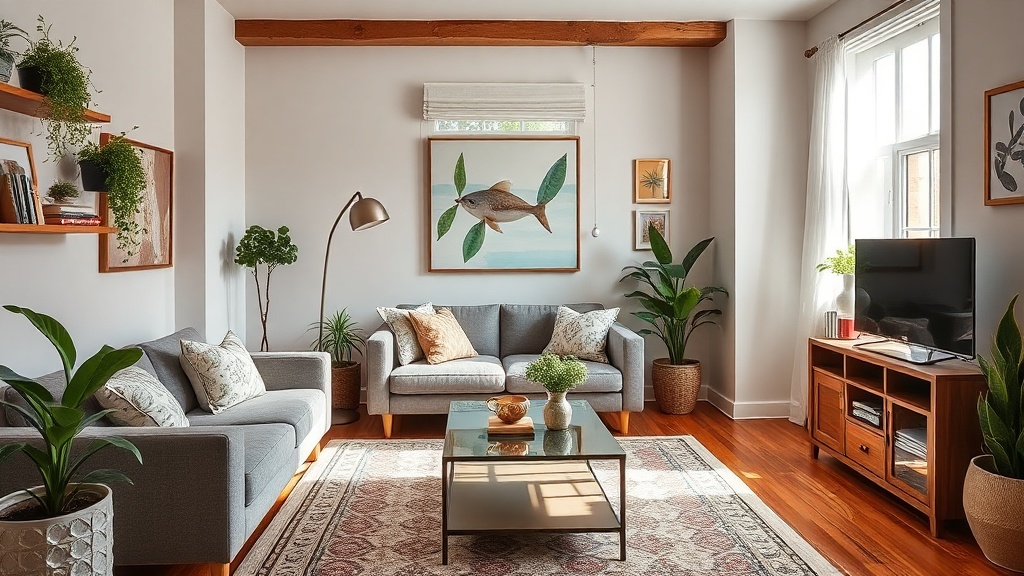
10 Clever Small Space Decorating Ideas That Maximize Every Square Inch

Invest in Multifunctional Furniture Pieces
Use Vertical Space with Tall Shelving Units
Hang Mirrors to Create Visual Depth
Choose Light Colors and Strategic Lighting
Embrace Hidden Storage Opportunities
Small spaces demand ingenuity. Every square inch carries weight, and decorating decisions become high-stakes moves in a spatial chess game. This post unpacks ten proven strategies that transform cramped quarters into functional, beautiful living spaces—without the luxury of square footage to waste. Whether you're handling a studio apartment, a compact cottage, or simply a room that never quite felt right, these ideas will change how you think about limitations.
How Do You Make a Small Room Look Bigger Without Renovating?
Paint walls, ceilings, and trim the same color. This single decision eliminates visual breaks and tricks the eye into perceiving continuous space. Designer Sheila Bridges has championed this approach in Harlem brownstones for decades—her "ombré" technique (gradually shifting tones within one color family) creates depth without harsh contrast.
Light colors work best for this. Benjamin Moore's "Chantilly Lace" or Farrow & Ball's "Pointing" reflect light beautifully. But don't fear dark hues in tiny spaces—deep navy or charcoal can actually recede walls visually, creating a cocoon effect that feels intentional rather than cramped. The secret lies in commitment: one color, multiple surfaces, no hesitation.
Another underutilized tactic? High-gloss paint on ceilings. The reflection bounces light downward, effectively raising the roof. It requires flawless prep work (every imperfection shows), but the result justifies the labor.
What Furniture Works Best in Small Spaces?
Scale beats size every time. A full-sized sofa with clean lines and exposed legs (the West Elm Urban Sofa measures 72 inches) often functions better than a cramped loveseat. The visual lightness of raised furniture—pieces that don't sit flush with the floor—creates breathing room underneath.
Consider these proven options:
| Furniture Type | Small Space Winner | Why It Works |
|---|---|---|
| Sofa | West Elm Urban (72") | Clean lines, visible legs, no bulk |
| Dining Table | IKEA NORDEN (extendable) | Expands from 4 to 8 seats when needed |
| Bed | Thuma Platform Frame | No box spring, under-bed storage, minimalist profile |
| Storage | CB2 Helix Bookcase | Vertical emphasis, open back, airy aesthetic |
Multi-functional pieces deserve attention, but here's the thing: don't sacrifice quality for gimmicks. A Murphy bed with a flimsy mechanism becomes a daily frustration. The Resource Furniture line (Italian-designed wall beds starting around $3,500) operates smoothly enough for daily use. Worth noting—cheap alternatives rarely survive five years of regular operation.
Vertical Storage: The Forgotten Frontier
Floors have limits. Walls don't. Floor-to-ceiling shelving transforms dead vertical real estate into functional storage and display space. The IKEA BILLY bookcase—ubiquitous for good reason—extends to 93 inches and costs under $100. Stack two units, anchor properly, and you've built a library that draws the eye upward.
Mount everything possible. Floating shelves in kitchens (the West Elm Floating Shelves handle cookware beautifully), wall-mounted desks that fold flat, televisions on articulated arms that swing away when not in use. Every item occupying floor space represents a missed opportunity.
Over-door organizers work beyond bedrooms. Pantry doors store spices (the mDesign Over-Door Organizer fits standard 24-inch doors). Bathroom doors hold hair tools and toiletries. Even closet doors become additional real estate with the right hardware.
How Can Mirrors Actually Expand a Space?
Strategically placed mirrors create the illusion of depth by reflecting both light and views. Position a large mirror opposite a window, and you've effectively doubled the natural light while suggesting another room exists beyond the glass. Designer Miles Redd routinely installs mirror walls in compact Manhattan apartments—sometimes antiqued or tinted to avoid the gym-locker effect.
The scale matters more than the frame. A collection of small mirrors (the trendy gallery-wall approach) fragments the reflection. One substantial piece—think 48 inches minimum—delivers impact. Source vintage frames at auction houses like 1stDibs or scour estate sales for gilt options that cost a fraction of retail.
Consider mirrored furniture with restraint. A single piece—a console table, perhaps, or the IKEA MALM dresser with mirrored overlay—adds sparkle without overwhelming. Multiple mirrored surfaces create a disco-ball effect that feels chaotic rather than expansive.
The 18-Inch Rule and Other Spacing Wisdom
Traffic flow makes or breaks small spaces. Maintain 18 inches minimum between furniture pieces for comfortable passage. Less than that, and rooms feel like obstacle courses. More than 36 inches, and the space starts to feel vacant rather than airy.
Coffee tables demand 14-18 inches from sofa edges—close enough to reach, far enough to stand. Dining chairs need 24 inches of clearance behind them when pulled out. These aren't arbitrary numbers; they derive from human proportions and movement patterns.
The catch? Measuring with precision. That vintage armchair looks perfect in the showroom. In your 11-foot living room? It's a roadblock. Use painter's tape to outline furniture dimensions on floors before purchasing. Walk the "path." Open imaginary drawers. This five-minute exercise prevents costly mistakes.
Lighting Strategies That Open Up Cramped Rooms
Single overhead fixtures flatten space. Layered lighting—ambient, task, and accent—creates dimension and flexibility. In small rooms, this becomes particularly vital.
Wall sconces eliminate the footprint of table lamps. Swing-arm models (the Rejuvenation ORMAND collection offers excellent proportions) provide reading light without nightstands. Picture lights above artwork draw attention upward while adding warmth.
Pendants over dining areas (even tiny breakfast nooks) define zones without walls. The catch? Scale appropriately. A fixture wider than 12 inches overwhelms most small tables. The Schoolhouse Electric Satellite 3 Pendant—10 inches in diameter—strikes the right balance.
LED strip lighting concealed under cabinets, inside closets, or behind headboards adds ambient glow without visible fixtures. Philips Hue strips integrate with smart home systems, allowing color temperature adjustments that shift a room's mood from productive daylight to warm evening tones.
Can Dark Colors Work in Small Spaces?
Absolutely—with caveats. Dark, saturated hues recede visually, making walls appear to fall away. Designer Abigail Ahern built her reputation on inky interiors—charcoal living rooms, midnight bedrooms—that feel expansive rather than claustrophobic. The secret lies in continuity and contrast management.
Paint everything: walls, trim, ceiling, doors. One uninterrupted dark envelope eliminates visual boundaries. Then introduce light elements—pale textiles, metallic accents, abundant greenery—to create necessary contrast. Without that interplay, dark rooms become caves.
Gloss levels matter enormously. Matte finishes absorb light (desirable in south-facing rooms). Eggshell or satin reflect slightly, adding subtle dimension. Reserve high-gloss for accents—trim, doors, or that ceiling trick mentioned earlier.
Curated Display: The Art of Restraint
Small spaces magnify clutter. Every object competes for attention, and crowded surfaces feel chaotic rather than cozy. The solution isn't minimalism—it's curation.
Rotate collections seasonally. Store three-quarters of books, swapping volumes quarterly. The same applies to decorative objects, textiles, even artwork. This practice (common in Japanese homes where storage space remains limited) keeps spaces fresh while honoring possessions.
Group objects thoughtfully. The rule of three dominates design for good reason—odd numbers create visual tension and interest. Vary heights within groupings: a tall vase, medium sculpture, small candle. Leave breathing room between pieces.
Negative space speaks volumes. A single stunning object on a shelf outshines a crowded arrangement. The eye needs somewhere to rest. That said, completely bare surfaces feel sterile rather than serene. Strike the balance—curated, not empty.
Window Treatments That Maximize Light
Natural light remains the most powerful tool for expanding perceived space. Window treatments should frame and enhance it, not block it.
Mount curtain rods 12-18 inches above window frames, extending 8-12 inches beyond the sides. This creates the illusion of larger windows while allowing maximum light penetration when panels are drawn. Choose floor-length panels—even in modest rooms, the vertical emphasis draws eyes upward.
Sheer fabrics filter harsh light without eliminating it. The IKEA LILL curtains cost $5 per pair and diffuse sunlight beautifully. Layer with blackout liners for bedrooms, mounted on separate rods for independent operation.
Roman shades (custom versions from The Shade Store, or DIY options using fabric and tension rods) suit windows where full curtains overwhelm. Keep them simple—pleated styles add bulk that competes with limited space.
Final Touches: Texture and Personality
Small spaces risk feeling generic. Texture prevents this. Woven baskets, nubby linens, weathered wood, hammered metal—tactile variety adds depth that transcends square footage. The Danish concept of hygge (comfort, coziness, contentment) depends heavily on textural richness.
Plants introduce life and scale. Tall specimens (fiddle leaf figs, olive trees, rubber plants) draw the eye upward. Trailing varieties (pothos, philodendron) soften edges and add vertical interest. Even small spaces accommodate greenery—wall-mounted planters, hanging macramé holders, or a single statement plant in a corner.
Artwork personalizes without consuming space. Create gallery walls using uniform frames (the IKEA RIBBA line, or thrift-store finds painted to match). Keep spacing consistent—2-3 inches between pieces. Or choose one large-scale piece that anchors the room. Saatchi Art offers original works at accessible price points, or source vintage prints at estate sales and frame simply.
The most important element? Intentionality. Every object in a small space should earn its place through beauty, function, or meaning. There's no room for "maybe later" or "just in case." Edit ruthlessly, display proudly, and trust that constraints breed creativity—the well-kerned typeface, the perfectly proportioned room, the space that feels like home regardless of its dimensions.